Differential scanning calorimetry:
Description of DSC:
There are two types of DSC commercially available: Heat Flux (HF) Type and Power Compensation (PC) Type. Figure 22.01 shows the block diagram of HF and PC types.
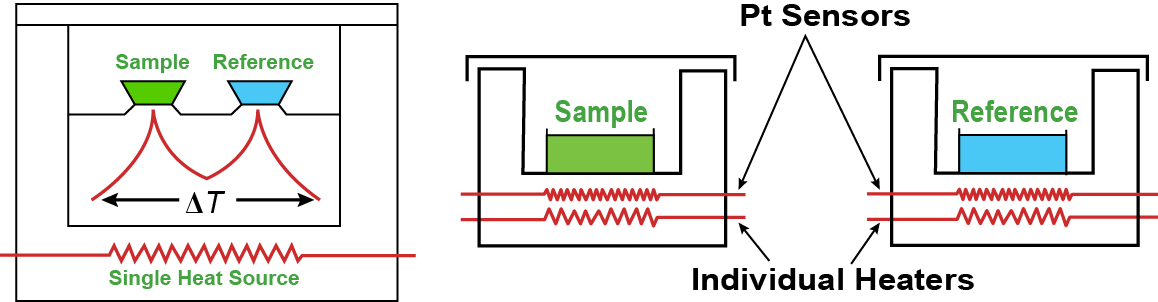
Figure 22.01: Schematic diagram of HF and PC types DSC.
In HF type DSC:
• Both sample and reference pans are heated by a single furnace through heat sink and heat resistor. Heat flow is proportional to the heat difference of heat sink and holders. The temperature versus time profile through a phase transition in a heat flux instrument is not linear.
• At a phase transition, there is a large change in the heat capacity of the sample, which leads to a difference in temperatures between the sample and reference pan.
• A set of mathematical equations convert the signal into heat flow information. By calibrating the standard material, the unknown sample quantitative measurement is achievable.
In PC type DSC:
Both sample and reference pans are heated by a different furnaces. When an event occurs in the sample, sensitive Platinum Resistance Thermometer (PRT) detects the changes in the sample, and power (energy) is applied to or removed from the sample furnace to compensate for the change in heat flow to or from the sample. As a result, the system is maintained at a “thermal null” state at all times. The amount of power required to maintain system equilibrium is directly proportional to the energy changes occurring in the sample. No complex heat flux equations are necessary with a power compensation DSC because the system directly measures energy flow to and from the sample.
In addition, PC type DSC has enhanced modulated temperature DSC (StepScan) technique and fast scan DSC (HyperDSC) for dramatic improvements in productivity, as well as greater sensitivity.
Furthermore, the heating and cooling rate of PC types DSC can be as high as 500°C/min.