Low-energy electron diffraction:
• Low-energy electron diffraction (LEED) is one of the principal techniques for the determination of surface structures. This technique can be used in one of the following two ways:
• Qualitatively:
The diffraction pattern is recorded and analysis of the spot positions yields information on the size, symmetry and rotational alignment of the adsorbate unit cell with respect to the substrate unit cell.
• Quantitatively:
The intensities of the various diffracted beams are recorded as a function of the incident electron beam energy to generate so-called I-V curves which by comparison with theoretical curves may provide accurate information on atomic positions.
LEED: Principle of operation:
A beam of electrons of a well-defined low energy (typically in the range 20-400 eV) is incident normally on the sample as shown in Figure 7.01. The diffracted electrons can be observed on a fluorescent screen after energy-filtering grids, which selects only the electrons with the same kinetic energy as the primary electrons.
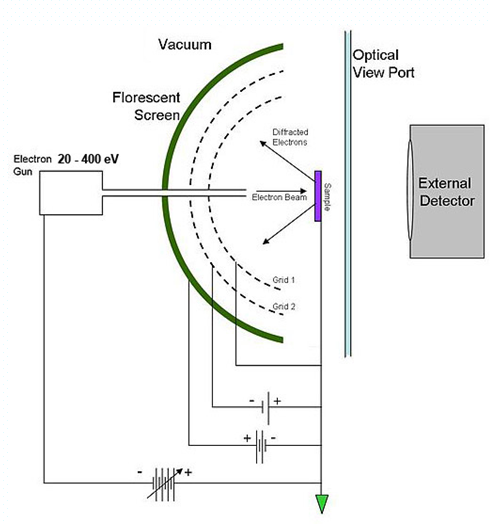
Figure 7.01: Schematic diagram of LEED set up.
|