If we consider rectangle EBFC inside rectangle ABCD, the length E’F’ is shorter than EF in the perspective view. B’C’ and E’F’ can be obtained as follows.
Join s to ef and bc. From point of intersection of these lines with PPP, draw vertical lines to intersect the lines joining V and A’D’.
If we consider rectangle EBFC inside rectangle ABCD, the length E’F’ is shorter than EF in the perspective view. B’C’ and E’F’ can be obtained as follows.
Join s to ef and bc. From point of intersection of these lines with PPP, draw vertical lines to intersect the lines joining V with A’ and D’.
E’ F’ and B’C’ are called the line of heights (LOH) of EF and BC. LOH helps us to draw perspective of the surfaces behind or in front of PPP.
Worked out problems:
Problem 1: The top view and Front view of a triangular prism resting on its rectangular face on the ground is shown in figure 5 (a). A triangular face is parallel to and 15 mm behind PPP. The observer is viewing the object from a point 50 mm above the ground and 30 mm in front of the PPP. The central plane (CP) is 90 mm towards the left of the axis of the prism. Draw the perspective view of the prism.
Solution: The perspective view is shown in figure 5 (b). The step wise procedure of obtaining the perspective view is as follows:
- Draw the front view and top view of the triangular prism.
- Draw the perspective picture plane (PPP) 15 mm behind PPP (below the edge abc in the top view).
- Draw HL 50 mm above GL.
- Locate station point S and S’ in the top view and front view respectively. S is 30 mm below line PPP and 90 mm towards left of CP (left of edge cf). S’ is in HL and passing through the verticalprojector through S.
- In the top view, draw lines from S to meet the corners of the prism (i.e. points s, b, c, d, e, and f). Mark the intersection of these lines with PPP as a1, b1, c1, d1, e1, and f1.
- In the front view, draw lines from S’ to a’, b’, and c’.
- Draw vertical projectors from points a1, b1, c1, d1, e1, and f1 such that they intersect the lines joining S’ with a’, b’ and c’ to obtain the points A, B, C, D, E, and F of the perspective view..
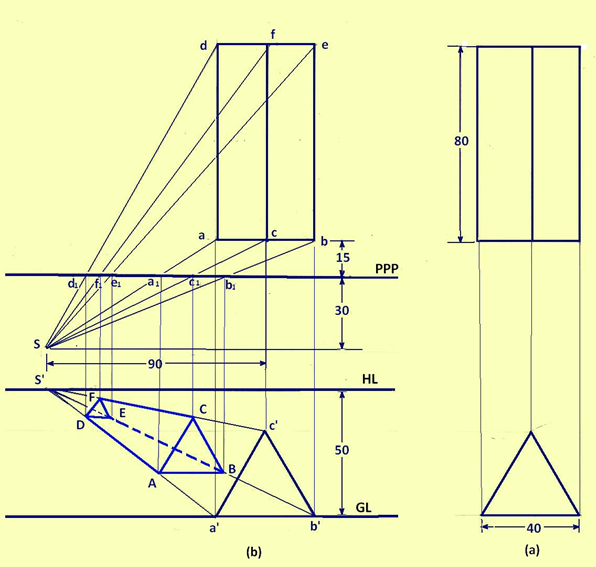
Figure 5. Showing the solution to the problem 1.