Development of surfaces
A development is the unfold / unrolled flat / plane figure of a 3-D object. It is also called a pattern where the plane may show the true size of each area of the object. When the pattern is cut, it can be rolled or folded back into the original object as shown in figure 1.
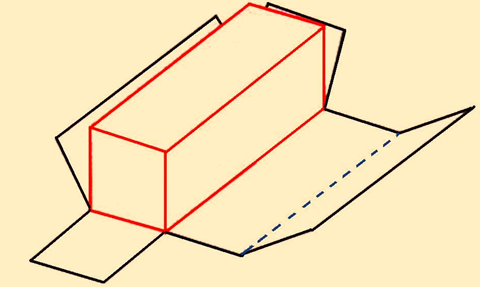
Figure 1. Typical development of the surface of a cuboid.
Types of development
There are three major types of development followed by industries. Examples are shown in figure 2.
- Parallel line development: In this parallel lines are used to construct the expanded pattern of each three-dimensional shape. The method divides the surface into a series of parallel lines to determine the shape of a pattern.
- Radial line development: In this, lines radiating from a central point to construct the expanded pattern of each three-dimensional shape is used. These shapes each form part of a cone and lines radiating from the vertex of the cone generate the expanded pattern of the curved surface as shown in the following explorations.
- Triangulation method: This is generally used for polyhedron, single curved surfaces, and warped surfaces.
- Approximate development: In this, the shapes obtained are only approximate. After joining, the part is stretched or distorted to obtain the final shape
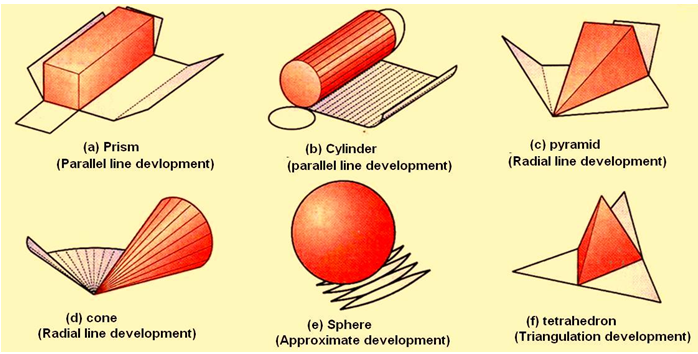
Figure 2. Typical examples of the various types of development.