Module 5 : Trajectory Planning of end effectors
Lecture 12 : Trajectory planning I ( point to point and continuous trajectories)
Introduction
 
So far, you have studied various types of robots; sensor and actuators used in typical robots etc. You have learnt about the various mechanism elements used in transmitting the motion from the actuators at the joints to the end-effector which performs certain desired tasks. For example, a stationary robot manipulator may be designed to carry out spray painting. On the other hand a mobile robot (such as an AGV) may be required to move around the shop floor autonomously, performing various tasks.
 
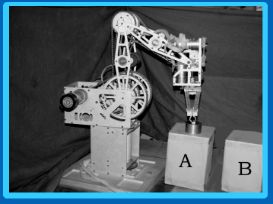
We will now study the nature of such tasks performed by a robot and the motions required to be generated at the joints in order that the end-effector moves as per the requirement of the desired task. Let us look at a typical pick-and-place device as shown in Fig. 12.1.1.
 

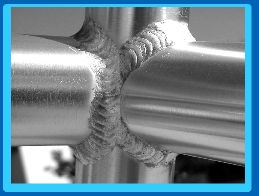
The robot is required to pick objects from point A and place them at point B. The specific path taken by the end-effector is not of much concern except that it should avoid collision with other objects in the environment. Consider another typical task such as welding depicted in Fig. 12.2.2, wherein the end-effector is required to strictly trace the desired path to ensure a proper weld.


Fig 12.1.1: Pick and Place Robot


Fig12.1.2: A typical Weld