| AC-DC-AC conversion
Power Flow can also be controlled by converting AC to DC by thyristor bridges or Voltage Source Converters and reconverting the DC to AC (at another bus) again by the same means. The converters are connected in shunt with the AC transmission system at 2 buses. If a substantial distance between the 2 buses is involved, then high voltage DC transmission is done. The power flow is a function of the converter firing angles and is practically independent of the voltage phase angle and frequency at either end.
Normally, DC links embedded in an AC system are mainly used to transfer power over long distances which is difficult with AC lines (see problems with long distance AC transmission in module 2).
DC links are also used to allow for controlled power inter-changes between two systems which are not synchronously connected is shown in the figure on the right.
You may simulate HVDC link using the MATLAB/SIMULINK file (hvdc.mdl).
|
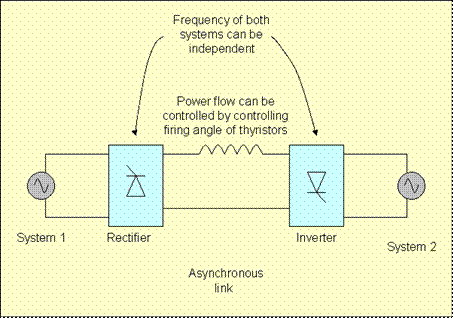 |
Note: If the two systems in the figure above were to be connected using AC line(s), then the frequencies of both systems would have to be the same and the total power transfer from one system to another cannot be controlled even if variable reactance type devices like TCSC are connected. At best, such devices can control the sharing of power flow between parallel AC paths. The only way to control the total power flow in AC tie-lines is by controlling the generation/load in the two systems using AGC, which we learnt in the previous module.
All the options for power flow control involve substantial cost, but can allow for better utilization of network by not only allowing desired power flow through various paths but enhancing overall power transfer levels.
An example of power flow control in a meshed system using various devices is given next (example) . |


