For example, if we know that the flexural strength of a concrete mix is normally distributed with σ = 1.5 MPa, and we want to estimate a Confidence Interval for the true mean ( μ, mean flexural strength of that particular concrete mix) with 95% confidence and interval width of 1.0 MPa what are the minimum concrete beams to be tested? (n=?). Another example is to compare the effect of two admixtures. Is admixture A's mean effect on concrete strength equivalent to Admixture B's effect ?
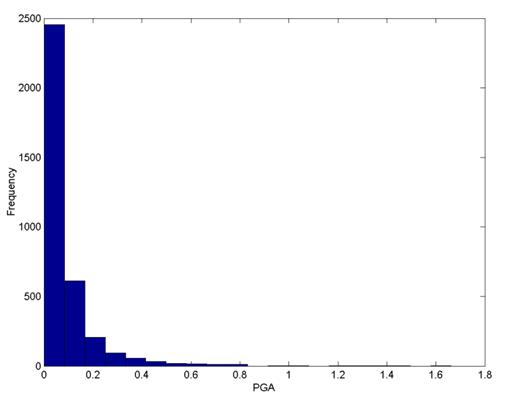
Figure 1.4: Frequency histogram of Peak Ground Acceleration data
Similarly, there are other areas of structural engineering where the probability concepts are equally important. Forces like wind force, earth quake force acting on the structures are variable and this variability also cannot be explained without out the support of relevant data. It is necessary to have certain understanding on this variability when using these forces in designing the structures. For example, peak ground accelerations (PGA) are modeled using clipped normal, exponential distributions. To fit some kind of model it is necessary to understand the variability in the data.
Similarly, Geotechnical engineer has to deal with the natural materials and understanding of the properties of these materials is not comprehensive. These properties must be inferred from limited and costly observations. Offshore structures are the typical examples where many uncertainties, such as uncertainties about loads acting, and how much load a foundation can sustain. Probability concepts are important when designing the foundations on weak soils and when the soil conditions are varying. Various types of tests are required to evaluate the soil conditions. Minimum number of tests required in order to have certain confidence on the evaluated soil parameters is a question here. It is the responsibility of the engineer to interpret the limited amount of data that was collected. Probability concepts are useful in finding the answers for this kind of problems. Similarly, in slope stabilization, different kinds of additive materials are used and it is necessary to carry out comparative studies before selecting one.
In water resource engineering, in most of the sub-areas, basic understanding of probability concepts is necessary. In this field the uncertainties involved can be divided into four basic categories: hydrologic, hydraulic, structural, and economic. More specifically, uncertainties could arise from various sources including natural uncertainties, model uncertainties, parameter uncertainties, data uncertainties, and operational uncertainties. Despite numerous research efforts made to further the understanding of various processes in hydro systems, there is still much more that are beyond the researcher's grasp. Therefore, uncertainties exist due to lack of perfect knowledge concerning the phenomena and processes involved in the problem solving approach.
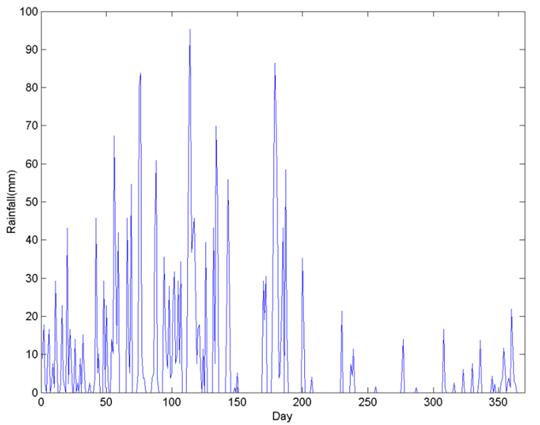
Figure 1.5: Time series representation of the Daily rainfall data