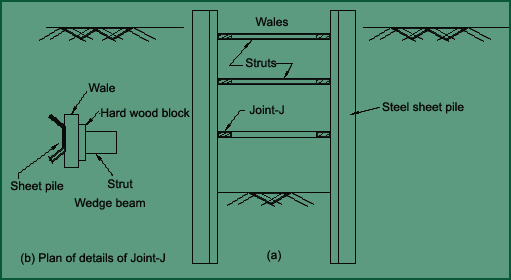
The Wales are made of the steel. The lateral thrust from the sides is resisted by horizontal members called the struts are placed across the excavation And wedged against the Wales. The struts may be of the steel or wood. As he Excavations Progresses, another set of Wales and struts is inserted. The process is continued till the excavation is complete. It is recommended that the sheet piles should be driven several meters below the bottom of excavation to prevent local heaves. If the width of a deep excavation is large, inclined bracing may be used. Figure shows the details of the joint J.
The upper strut is placed when the excavation is shallow and little lateral yield of soil has occurred to change appreciably the original state of stress. As excavation proceeds downward the lower part of the face is freely to yield inward before it could be restrained by the next strut. The inward yield of soil increase with an increase in the depth of excavation. Thus problem is analogues to a retaining wall tilting about its top. The sheeting tilts about its tops. |