10.2 Alkaloid Based Reactions
10.2.1 Conjugate Addition Reactions
Cinchona alkaloids are a large class of compounds extracted from the bark of homonym trees cultivated in equatorial climatic zones, between Bolivian and Venezuelan Andes, and Indonesia. In the extract of the bark are present more than 30 alkaloids (5-15% w/w). Four of them represent 50% of all the alkaloids such as quinine ( QN ), quinidine ( QD ), cinchonidine ( CD ) and cinchonine ( CN ) (Scheme 1).
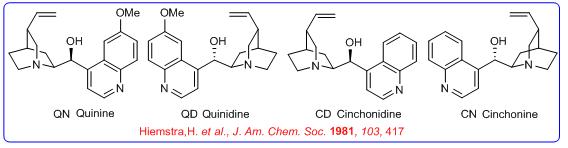
Scheme 1 . Bifunctional Alkaloid Based Organocatalysts
QN is the most well known alkaloid and used as the anti-malarial drug of choice for over 400 years until chloroquine discovered, while QD is used as an anti-arrhythmic agent. In chemistry, all these compounds ( QN , QD , CD and CN) are used as cheap chiral source. These molecules activate the nucleophile by enamine and carbanion formation, and electrophile via hydrogen bond.
These compounds are diastereomers having five stereogenic centers and the chiral quinuclidinyl nitrogen is the most important as it is responsible of the direct transfer of chirality during catalysis. Quinine vs quinidine and cinchonidine vs cinchonine have opposite absolute configuration this means that very often these pairs of diastereomers act as enantiomers at C-9 position. Furthermore, the C-9 OH group acts as Brønsted acid. So acid and base coexist in these molecules, and thus, it is possible to activate both the nucleophile and the electrophile simultaneously to use as bifunctional organocatalysts (Scheme 2).
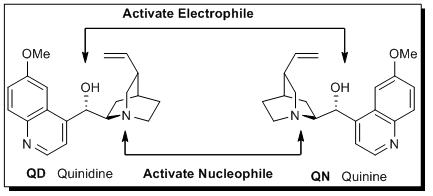
Scheme 2. Dual Activation Modes by Bifunctional Basic QD and QN Organocatalysts