Mechanism
 |
Examples
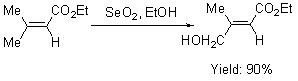 |
R. W. Curley, Jr., C. J. Thomas, J. Org. Chem. 1986, 51, 256.
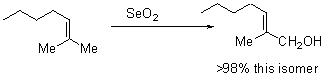 |
H. Rapoport, U. T. Bhalerao, J. Am. Chem. Soc. 1971, 93, 4835.
1.4.2 Oxidation of Alcohols with Aluminium Alkoxides (Oppenauer Oxidation)
Aluminium triisopropoxide and aluminium tributoxide have been found to be effective reagents for the oxidation of secondary alcohols to ketones in the presence of ketone such as acetone. Acetone acts as a hydrogen acceptor, and it is transformed into 2-propanol. The presence of excess of acetone drives the reaction towards the oxidation product. The use of inert solvent such as benzene, toluene or dioxane minimizes the side products and also helps to raise the reaction temperature.
 |
The β,γ-double bonds generally migrate into conjugation with the carbonyl group under the reaction conditions (Scheme 8). For example, cholesterol is oxidized to cholestenone with the migration of the double bond in the presence of cyclohexanone, which acts as hydrogen acceptor.
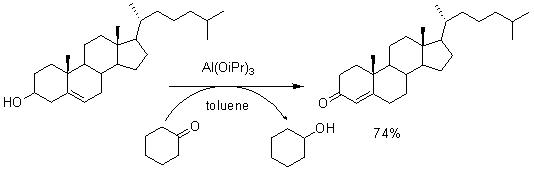 |
Scheme 8 |