4.6.2 The Synthesis of Peptides
In the synthesis of peptides one amino acid is protected at its amino end with group Y and the second is protected at its carboxyl end with a group Z. The condensation of these protected amino acid derivatives is then carried out using dehydrating agent such as DCC to generate peptide bond. As per the requirement, one of the protecting groups is now removed and a third protected amino acid is introduced to the second peptide bond. Repetition of the procedure affords the desired peptide.
Protection and Deprotection of Carboxyl Group
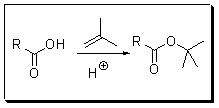
- • The carboxyl group is normally protected by converting it into its t -butyl ester using isobutylene in the presence of sulfuric acid.
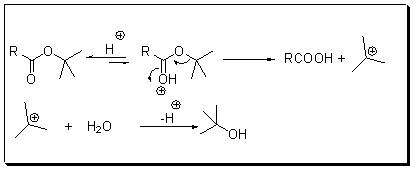
• The protecting group could also be easily removed using mild acid hydrolysis via the formation of a t-butyl carbocation.
Protection and Deprotection of Amino Group
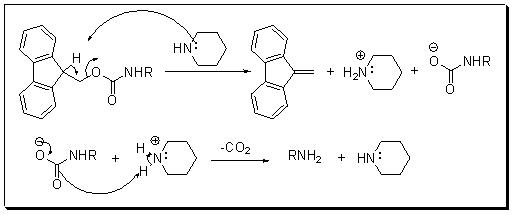
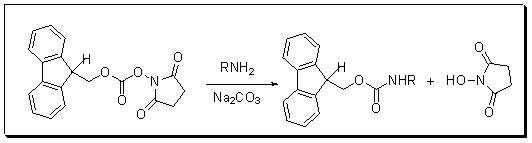
- • (9-Fluorenyl)methyoxycarbonyl group (Fmoc) is commonly used as protecting group for the protection of the amino group of amino acid which can be facilitated using Na2CO3 in a mixture of DME and water.
• The important characteristic of this protecting group is that it can be easily removed by treatment with amine base, such as piperidine.