Incineration A HW may be "destroyed" for example by incinerating it at a high temperature. Flammable wastes can sometimes be burned as energy sources Today incineration treatments not only reduce the amount of hazardous waste, but also they generate energy throughout the gases released in the process. Problem: Release of toxic gases. Solution: Starved air incineration, controlling the amount of oxygen allowed proves to be significant to reduce the amount of harmful by-products produced, Using this technology it is possible to control the combustion rate of the waste and therefore reduce the air pollutants produced in the process. |
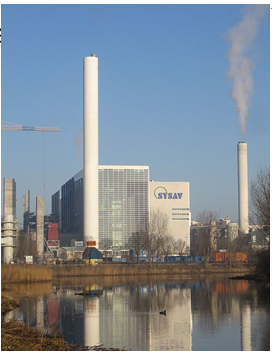
SYSAV incineration plant in Malmö, Sweden capable of handling 25 metric tonsshort tons) per hour of household waste.
|
Types of Incinerators
- Burn pile: The burn pile, or burn pit is one of the simplest and earliest forms of waste disposal, essentially consisting of a mound of combustible materials piled on bare ground and set on fire
- Burn barrel: The burn barrel is a somewhat more controlled form of private waste incineration, containing the burning material inside a metal barrel, with a metal grating over the exhaust.
- Moving grate: The typical incineration plant for municipal solid waste is a moving grate incinerator. The moving grate enables the movement of waste through the combustion chamber to be optimised to allow a more efficient and complete combustion.
- A single moving grate boiler can handle up to 35 metric tons (39 short tons) of waste per hour, and can operate 8,000 hours per year with only one scheduled stop for inspection and maintenance of about one month's duration.