Some 95% of the elevated levels of nitrogen oxides in the atmosphere are the result of human activities. The remaining 5% comes from several natural processes. The major sources of nitrogen oxides include:
- Combustion of oil, coal, and gas.
- Bacterial action in soil.
- Forest fires.
- Volcanic action.
- Lightning.
Acids of nitrogen form as a result of the following atmospheric chemical reactions
NO + 1/2O2→ NO2
2NO2 + H2O →HNO2 + HNO3
NO2 + OH → HNO3
Finally, the concentrations of both nitrogen oxides and sulfur dioxides are much lower than atmospheric carbon dioxide which is mainly responsible for making natural rainwater slightly acidic. However, these gases are much more soluble than carbon dioxide and therefore have a much greater effect on the pH of the precipitation.
Effects of Acid Deposition
Acid deposition influences the environment in several different ways. In aquatic systems, acid deposition can effect these ecosystems by lowering their pH. However, not all aquatic systems are effected equally. Streams, ponds, or lakes that exist on bedrock or sediments rich in calcium and/or magnesium are naturally buffered from the effects of acid deposition. Aquatic systems on neutral or acidic bedrock are normally very sensitive to acid deposition because they lack basic compounds that buffer acidification.
One of the most obvious effects of aquatic acidification is the decline in fish numbers. Originally, it was believed that the fish died because of the increasing acidity of the water. However, in the 1970s scientists discovered that acidified lakes also contained high concentrations of toxic heavy metals like mercury, aluminum, and cadmium. The source of these heavy metals was the soil and bedrock surrounding the water body. Normally, these chemicals are found locked in clay particles, minerals, and rocks. However, the acidification of terrestrial soils and bedrock can cause these metals to become soluble. Once soluble, these toxic metals are easily leached by infiltrating water into aquatic systems where they accumulate to toxic levels.
Lake acidification
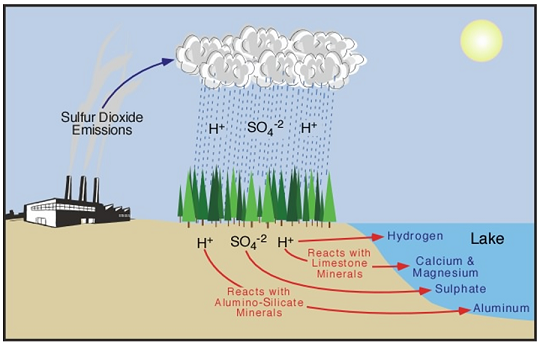
The severity of the impact of acid deposition on vegetation is greatly dependent on the type of soil the plants grow in. Similar to surface water acidification, many soils have a natural buffering capacity and are able to neutralize acid inputs. In general, soils that have a lot of lime are better at neutralizing acids than those that are made up of siliceous sand or weathered acidic bedrock. In less buffered soils, vegetation is effected by acid deposition because:
- Increasing acidity results in the leaching of several important plant nutrients, including calcium, potassium, and magnesium. Reductions in the availability of these nutrients cause a decline in plant growth rates.
- The heavy metal aluminum becomes more mobile in acidified soils. Aluminum can damage roots and interfere with plant uptake of other nutrients such as magnesium and potassium.
- Reductions in soil pH can cause germination of seeds and the growth of young seedlings to be inhibited.
- Many important soil organisms cannot survive is soils below a pH of about 6.0. The death of these organisms can inhibit decomposition and nutrient cycling.
- High concentrations of nitric acid can increase the availability of nitrogen and reduce the availability of other nutrients necessary for plant growth. As a result, the plants become over-fertilized by nitrogen (a condition known as nitrogen saturation).
- Acid precipitation can cause direct damage to the foliage on plants especially when the precipitation is in the form of fog or cloud water which is up to ten times more acidic than rainfall.
- Dry deposition of SO2 and NOx has been found to affect the ability of leaves to retain water when they are under water stress.
- Acidic deposition can leach nutrients from the plant tissues weakening their structure.