3.10.3.4. Reaction Intermediate Traps as Enzyme-Targeted Drugs
The trapping of reaction intermediate is another mechanism for the formation of covalent inhibitory complexes between the enzyme and inhibitor. Inosine monophosphate (IMP) dehydrogenase and DNA topoisomerase fall in this category. Inosine monophosphate dehydrogenase catalyzes the oxidation of IMP to XMP through the formation of a covalent cystinyl intermediate at C-2 of the purine ring. Mycophenolic acid, an uncompetitive inhibitor, binds in the NAD cofactor site, and prevents the hydrolysis reaction, thus trapping and stabilizing the covalent E−XMP complex. The structure of the trapped complex shows that the bicyclic ring system of mycophenolic acid packs underneath the hypoxanthine ring of XMP, thereby preventing release of the intermediate.
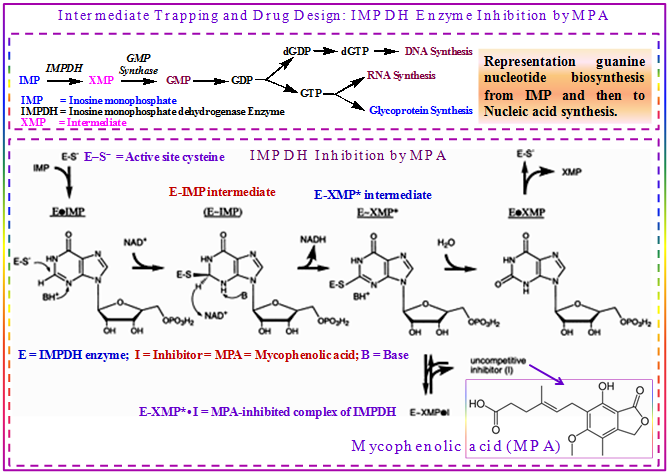
Figure 3.14: IMPDH enzyme inhibition by MPA-an example of intermediate trapping.
Mammalian and bacterial DNA topoisomerases catalyze the topological rearrangement of supercoiled and concatenated DNA, and serve as targets for the antitumor agents topotecan and irinotecan, and as targets for the fluoroquinoline antibiotics. In human topoisomerase I, the enzyme catalyzes single-strand cleavage and formation of a phosphodiester bond between Tyr723 and the DNA 3‘-phosphate. Biochemical evidence indicates that camptothecin, the parent compound for the marketed drugs irinotecan and topotecan, stabilizes the covalent complex, and several models suggest that it binds near the DNA cleavage site. In topoisomerase II, the enzyme cuts two DNA strands and generates four free ends. The enzyme covalently links both of the 5'-ends to catalytic residues in the active site, in effect prying open the DNA on the ends of a molecular fork and opening a gate through the DNA. The quinolone antibiotics are thought to stabilize this covalent intermediate.
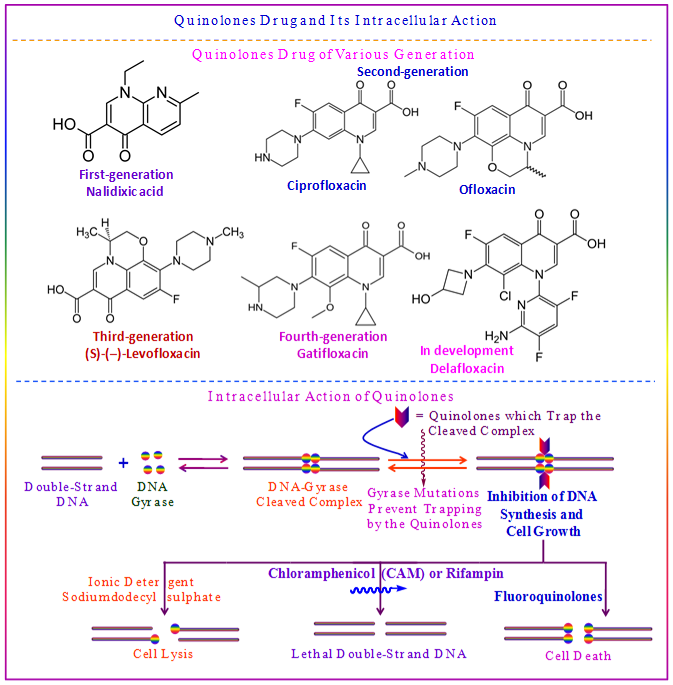
Figure 3.15: Various quinolone drugs and their mechanism of intracellular action.