3.10.3.3. Irreversible Inhibitors as Enzyme-Targeted Drugs
Drug design and discovery programs never set out to make irreversible inhibitors. Most of the enzymes that are irreversibly inhibited by drugs are covalently modified by the respective drug. In other cases, binding is so tight that the inhibitor remains bound for hours or even days, and binding can be considered functionally irreversible.
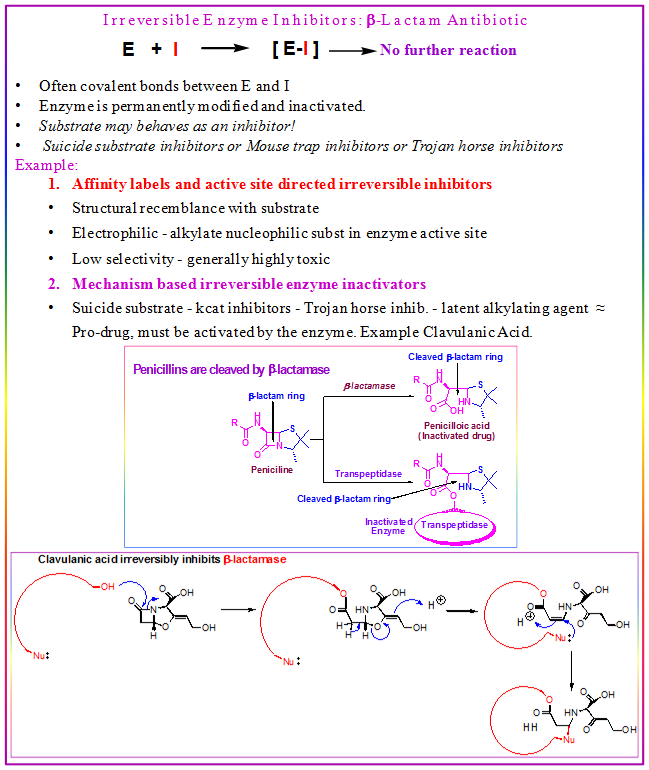
Serine type D-Ala-d-Ala carboxypeptidase is the most thoroughly studied example of a covalently inactivated enzyme drug target. All β-lactam antibiotics acylate the active site serine of the carboxypeptidase. This is generally a stable acylation that is resistant to hydrolysis, and therefore, it effectively eliminates all transpeptidase activity in the bacterium.
The resistance to β-lactam antibiotics occurs via hydrolysis of β-lactams by β-lactamase. While the acyl−enzyme intermediate in d-Ala-d-Ala carboxypeptidase is stable, the β-lactamase acyl−enzyme intermediate hydrolyzes at rates of 100−4000 s-1. However, several naturally occurring β-lactams, including clavulanate, tazobactam, and sulbactam, form kinetically stable acyl−enzyme intermediates and inactivate β-lactamase. These drugs are used to overcome β-lactamase resistance.
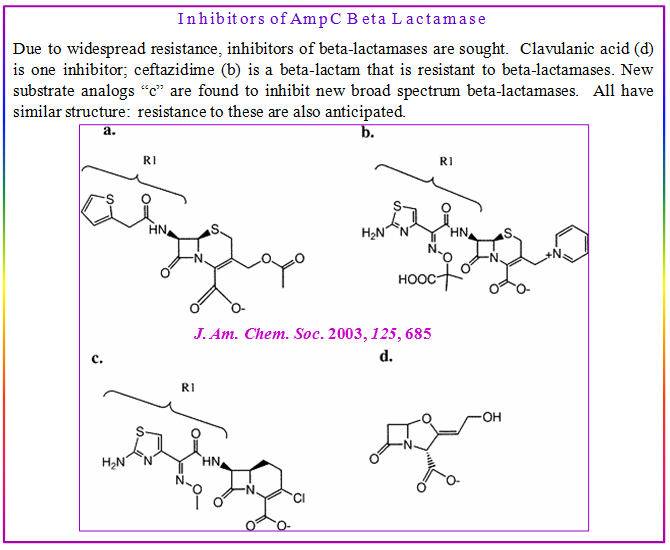
Figure 3.12: Some examples of b-lactamase inhibitor-irreversible inhiition.