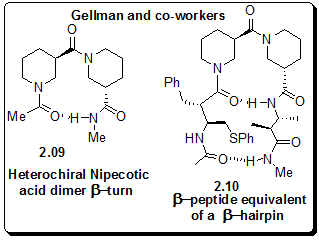
Figure 2.45: β-turn mimics that nucleate sheet or hairpin structure
The myriad of potential homologated amino acids and substitution patterns provides a plethora of opportunities for the creation of structure. Thus, Hanessian et al. recently reported that γ-tetrapeptide 2.12 (Figure 2.46), adopts a reverse turn conformation containing a 14-membered hydrogen-bonded ring [(i) C=O···HN (i + 3)].
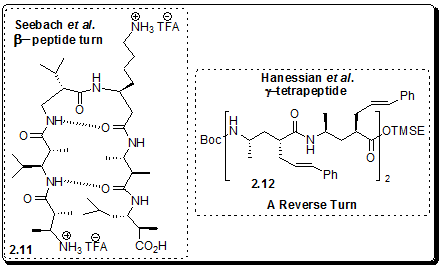
Figure 2.46 β-turn mimics that nucleate sheet or hairpin structure
Despite an exponential growth in the number of reports on the development of constrained non-peptide scaffolds as peptidomimetics, very few peptide-based drugs have been developed, necessitating an overhaul in the existing design principles. Newer concepts are emerging where the fundamental building blocks used by nature, such as amino acids, sugars, and nucleosides, are amalgamated to produce nature-like, and yet unnatural, de novo structural entities with multifunctional groups anchored on a single ensemble. One such hybrid design is represented by a class of compounds called sugar amino acids (Saa). These are carbohydrate molecules bearing both amino and carboxyl functional groups on the regular sugar framework. The rigid furan or pyran rings of these molecules make them ideal candidates as non-peptide scaffolds in peptidomimetics where they can be easily incorporated into a peptide backbone by using their carboxyl and amino termini.
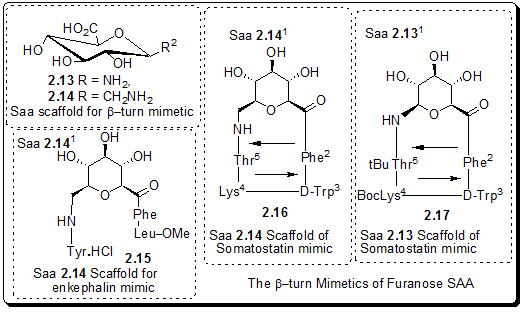
Figure 2.47: Pyranose sugar amino acid scaffolds as peptide β-turn mimetics.
In 1995, von Roedern and coworkers have reported one example of a sugar amino acid as a new type of peptidomimetic (Figure 2.47). The novel Saas were successfully incorporated into a cyclic peptide of the somatostatin containing tetrapeptide Phe-D-Trp-Lys-Thr. The conformational analysis clearly typified two β-turns. They have also reported the synthesis of pyranose sugar amino acids (Saas) as new non-peptide peptidomimetics utilizing carbohydrates as peptide building blocks.
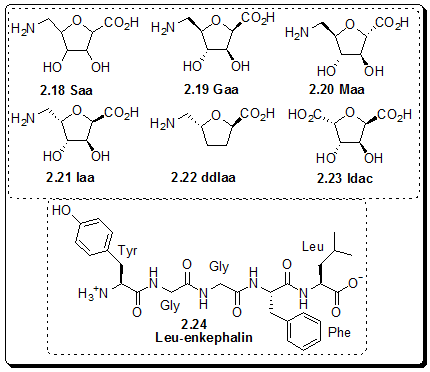
Figure 2.48: Different Sugar amino acids and diacid templates
The rigid frameworks of furanoid sugar amino acids prompted various research groups to use them as dipeptide isosteres in peptidomimetic studies. These molecules with constrained backbone angles, ω(i)and Φ(i+1), were expected to induce folded conformations in linear peptides. Chakraborty et al. have exploited these furanoid sugar amino acids (Saa) by incorporating into Leuenkephalin, chosen as a representative example of a short peptide, replacing its Gly-Gly spacer segment that is known to be flexible and amenable to different conformations depending on the binding environment (Figure 2.48-2.50).