2.6. β-Turn Peptidomimetic
2.6.1. Peptidomimetics and Their Importance
The discovery of the physiological role of a great number of peptides stimulated researchers all over the world towards design and synthesis of peptidomimetics or peptide like molecules. Since natural peptides seldom can be used therapeutically as drugs, because of the problems associated with low absorption, rapid metabolism and low oral bioavailability, many efforts aimed to modify the natural sequence of the amino acids of bioactive peptides achieved a desired, very focused effect. Peptidomimetics, which maintain the key elements required for activity but replace the labile peptide bonds with more stable features, have the advantage of providing new functionalities that can circumvent natural processes in the body. For example, they become able to perform functions that are not available with the natural materials, such as binding to and penetrating cell membranes and resisting degradation by enzymes.
Peptidomimetics that fold to mimic protein secondary structures have emerged as important targets of bioorganic chemistry. Recently, a variety of compounds that mimic helices, turns, and sheets have been developed, with notable advances in the design of b-peptides that mimic each of these structures. These compounds hold promise as a step toward synthetic molecules with protein like properties and as drugs that block protein-protein interactions.
Although initial efforts in peptidomimetic chemistry focused upon the development of enzyme inhibitors and peptide hormone analogues, this field now encompasses both the creation of pharmacologically useful analogues of biologically active peptides and the development of compounds that mimic protein structures. Current objectives include developing new drugs, gaining an enhanced understanding of protein folding, and creating catalysts and new materials with useful properties.
2.6.2. The Approaches to β-Turn Peptidomimetic
The β-Turn (Figure 2.40 and 2.41), which has also been referred to as the beta-bend, beta-loop or reverse turn, is one of the three major secondary structural elements of peptides and proteins. The surface localization of turns in proteins, and the predominance of residues containing potentially critita1 pharmacophoric information, has led to the hypothesis that turns play critical roles in a myriad of recognition events in biological systems. These events include but are not limited to the interactions between peptide hormones and their receptors, antibodies and antigens, and regulatory enzymes and their corresponding substrates. Reverse turn mimetics are powerful tool for the study of molecular recognition and are providing a unique opportunity to dissect and investigate structure-function relationships in complex proteins.
A great deal of effort has therefore focused on the design and synthesis of small constrained mimetics of turn structure to provide a better understanding of the molecular basis of peptide and protein interactions in addition to providing potent and selective therapeutic agents.
b-turns constitute a tetra peptide unit, which cause a reversal of direction of the peptide chain. Formally, turns can be described by the distance from the Cα of the first residue to the Cα of the fourth residue. When this distance is less than 7 Å and the tetra peptide sequence is not in a a-helical region, it is considered a β-turn. Additionally, a three residue reverse turn, popularly known as γ-turn, exists but is significantly less widely distributed.
β-turns are classified according to the Φ- and Ψ-angles of the i+1 and i+2 residues. In addition to the existence of a number of turn types (I, I’, II, II’, III, III’, IV, V, Va, VIa, VIb, VII, and VIII) the Cαi to Cαi+3 distance varies from 4-7 Å.
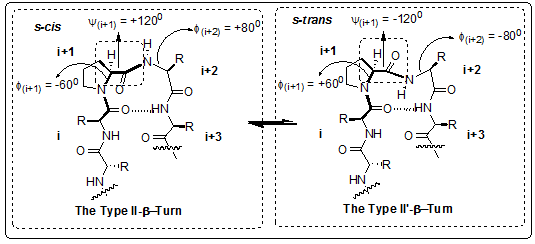
Figure 2.40: The type II- and II’-β-turn motif
While the retention or improvement of biological activity is the ultimate indicator of successful design, the success of many efforts has been measured by the ability of a scaffold to adopt a turn motif using spectroscopic methods such as circular dichroism (CD) or solution phase NMR.
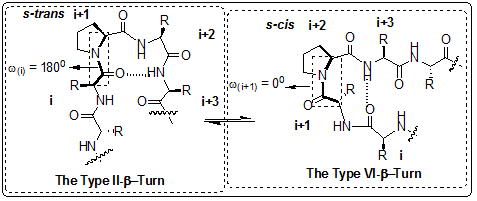
Figure 2.41: The type II- and VI-β-turn motif.
We will now briefly discuss the current state of the art of turn mimetic synthesis and scaffold design. The examples are confined to small molecule turn scaffolds that have been designed with diversity and parallel execution in mind.
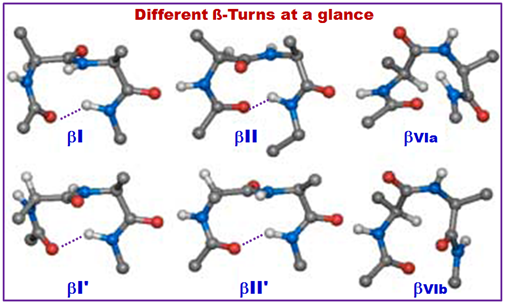
Figure 2.42: The Ball-stick model of various β-turns.