|
|
Fig. VII.16: Thermocouple |
|
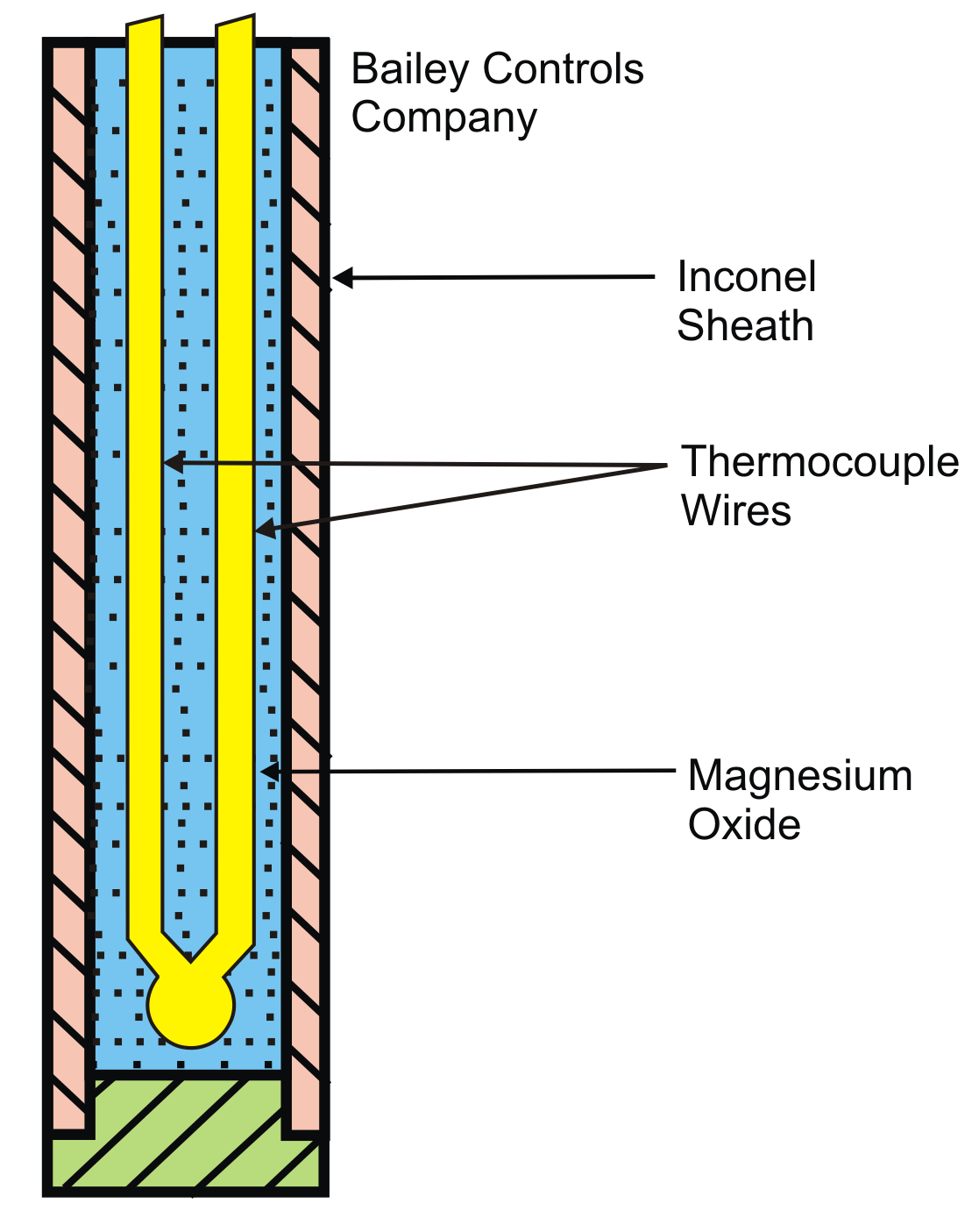 (a) Internal Construction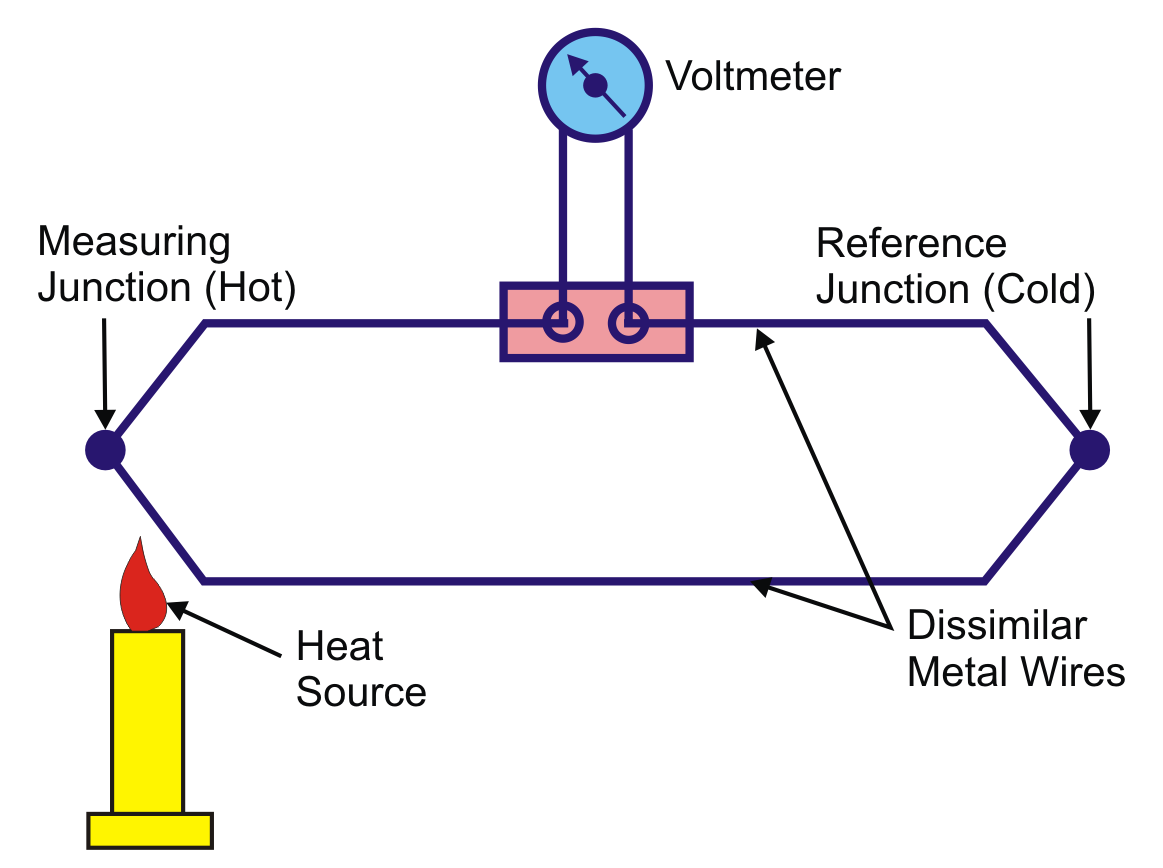
A thermocouple is constructed of two dissimilar metal wires joined at one end. It works on the principle of “Seabeck effect” whereby electromagnetic force is generated when two dissimilar metals are joined at two different temperature ends. When one end of each wire is connected to a measuring instrument, the thermocouple becomes a sensitive and highly accurate measuring device. Heating the measuring junction of the thermocouple produces a voltage which is greater than the voltage across the reference junction. The difference between the two voltages is proportional to the difference in temperature and can be measured on the voltmeter (in mV). Thermocouples may be constructed of several different combinations of materials. The most important factor to be considered when selecting a pair of materials is the "thermoelectric difference" between the two materials. A significant difference between the two materials will result in better thermocouple performance.