3. The reaction is complete and the resulting amplified nucleic acids are held at a low temperature (~4°C) until analysis.
Observation: The Analysis of PCR from different colonies on the agarose gel (Figure 40.3). colony 1 and 3 contains the plasmid containing insert of interest.
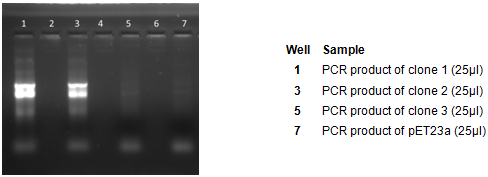
Figure 40.3. Analysis of different colonies on the agarose gel.
Experiment 40.2 : Verification of recombinant DNA (restriction digestion)
Screening by Restriction Digestion
Principle
Screening by Restriction Digestion is the classical method to determine the recombinant colonies, by performing a plasmid miniprep followed by restriction digestion. This technique is based on the principle that if the transformed colony contains the insert of interest, it can be digested from vector with the help of restriction enzyme and can be analysed by agarose gel electrophoresis.
Materials Required
- Transformed DH5α-clone E. coli culture plate
- LB broth
- Ampicillin (100mg/ml stock)
- Restriction digestion reagents (as per section 2)
- Agarose gel electrophoresis apparatus
Methodology
- All the 10 transformed DH5α-clond E. coli colonies were picked up from the culture plate and inoculated in LB amp+ broth.
- Plasmid was isolated by TELT method from all grown culture.
- Restriction digestion was setup for the plasmid isolated by one colony of 50µl reaction volume.
- 50µl of restriction digested sample was loaded on 0.8% agarose gel and electrophoresed for analysis.
Restriction digestion done for clone and plasmid pET23a. The digested products were run on agarose gel. After electrophoresis the result is as below.
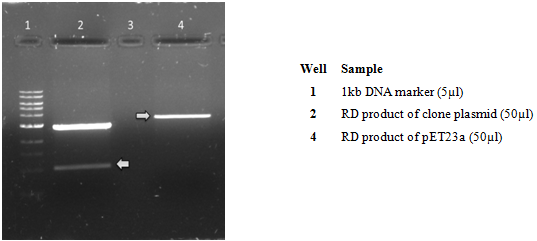
Figure 40.4. Analysis of restriction digestion of different colonies on the agarose gel. |