It is clear from figure 20.1 that the fraction of the substance in the funnels after n transfer/equilibration cycles corresponds to the binomial expansion of (p+q)n. Therefore, the fraction of the substance present in funnel r after n transfers ( r ≤ n ) is given by:
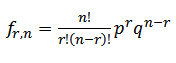 |
(20.5) |
If c0 is the original concentration of the substance in the funnel 1 (after addition of mobile phase), the concentration in funnel r is simply given by following expression:
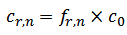 |
(20.6) |
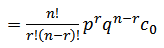 |
(20.7) |
If we need to know the funnel having the highest concentration of the substance, we simply have to take the average of binomial distribution. The funnel number x having the highest concentration is, therefore, given by:
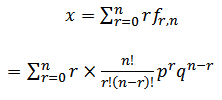 |
(20.8) (20.9) |
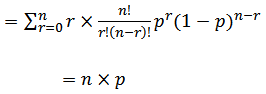 |
(20.8) (20.9) |
Consider a mixture having three chemical components having partition coefficients, 10, 1, and 0.1:

Therefore, pA = 10, pB = 1, and pC = 0.1. Figure 20.2 shows the distribution of these three components after 5, 10, 20, and 40 equilibration/transfer cycles.