These set of reactions operating in the absence of oxygen helps organism in many ways and these possibilities are discussed later in the lecture. Now we will discuss the mechanism of pyruvate conversion to lactic acid or alchol and the significance of these pathways in adopting to the low oxygen environment.
Anaerobic reduction of Pyruvate to Lactate- Pyruvate is reduced to lactate with an enzymatic action of lactate dehyrogenase. In this process, cell spend 1 molecule of NADH and 1 molecule of NAD+ is generated. The NAD+ produced in this process will be used to continue running glycolysis and other metabolic pathways.
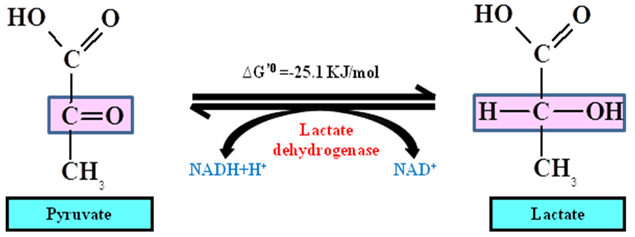
Figure 7.2: Conversion of Pyruvate to Lactate.
The free energy change (-25.1 KJ/mol) of the pyruvate to lactate conversion favors lactate formation inspite of no net gain of NADH, but it allows the glycolysis to keep running in the absence of oxygen.
Pyruvate to Ethanol- It is a two step process, first conversion of pyruvate to acetaldehyde and in the second step conversion of acetaldehyde to alchol. First step is a decarboxylation reaction catalyzed by pyruvate decarboxylase where as second step is reduction reaction catalyzed by alchol dehydrogenase.
The Over all equation of ethanol production from pyruvate is as follows
Glucose+2ADP+2Pi → 2 ethanol+2CO2 +2ATP+2H2O |