·
18.3 Attempts to improve DNA vaccines
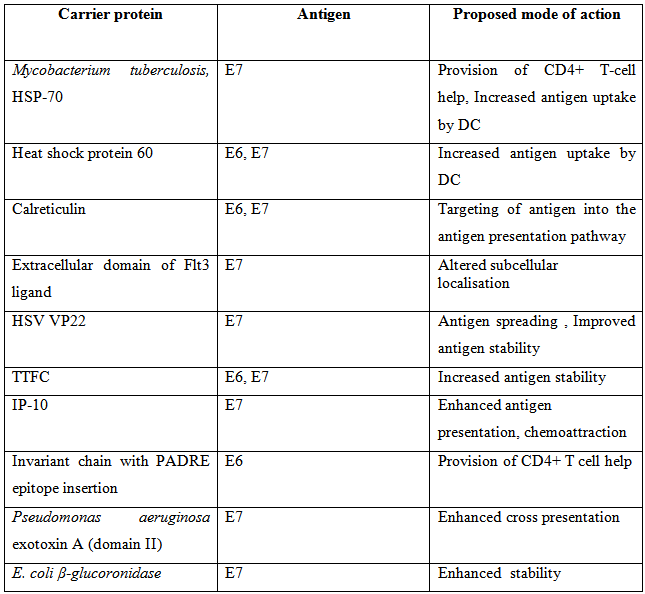
Efficacy of DNA vaccines can be improved by enhancing the immunogenicity of the encoded antigen. This can either be done by adding a genetic adjuvant or by altering the gene encoding the antigen itself. Usually a genetic adjuvant is added to increase the immunogenicity of the antigen and enhance the effects of vaccine. HGMB162 is an example of a genetic adjuvant. Immunogenicity of the antigen can also be increased by codon optimization , addition of signal sequences and genetic fusion to an entire protein referred to as carrier protein.Codon optimization is defined as the technique in which the gene encoding the antigen is edited for optimal transcription and translation in the species that the vaccine is meant for. With the repetition of the genetic code the optimal tRNA for any amino acid differs from species to species. Specifically when innate prokaryotic or viral genes are used in DNA vaccines, codon optimization can considerably enhance its transcription in the eukaryotic cells of the vaccinated host. Addition of signal sequences aims the antigen to various subcellular compartments, hence increasing the immunogenicity of DNA vaccines. Fusion of the antigen to a carrier protein is a device that is often used and required in the construction of DNA vaccines. (Table 2).
Table 18.2 Popular carrier proteins used for fusions with HPV-16 E6 and E7: