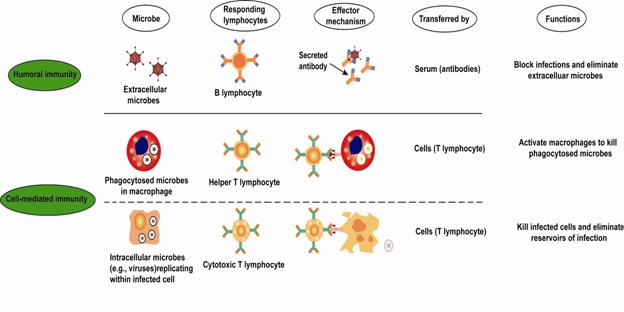
Adaptive immune responses are of two types
Humoral immune response
Cell mediated immune response
5.1 Humoral immune response
Humoral immune responses are mediated by the antibodies which are produced by activated B cells. Antibodies recognize the microbial antigen, neutralize the infectivity, and target the microbes to other effector system for degradation. Humoral immunity is the major type of immune response against extracellular microbes and toxins because the secreted form of the antibody can easily bind and eliminate the microbes and toxins. Occasionally antibodies may bind to the microbes to promote their phagocytosis in order to eliminate the infection.
5.2 Cell mediated immune response
This is also called cellular immunity, and is mediated by T lymphocytes. Cell mediated immunity plays an important role against intracellular microbes, viruses, and some intracellular bacteria. The cellular immunity promotes the destruction of microbes by direct killing or phagocytosis of the infected cells.
Figure 5.1 Schematic representation of humoral and cell mediated immunity: