2. Production of secretory IgA (sIgA)
Secretory IgA is an immunoglobulin that protects against dental caries produced by Streptococcus mutans. For the production of sIgA various antibody subunits are produced in different plant lines that are subsequently crossed to produce a functional antibody. The antibody does this by recognizing the native streptococcus antigen cell-surface adhesion molecule, which prevent colonization. Four separate transgenic plants synthesizing four distinct pieces of antibody (H, L, J chains and secretory component) were developed. In cross 1 the plants expressing H and L chains were crossed to give plants producing IgA. In the second cross these plants were crossed with plants expressing J chain to give the progeny producing dimeric IgA. The dimeric IgA producing plants were then crossed (cross3) with the plants expressing secretory component, the functional sIgA could be produced.
Secretory antibodies have many advantages. Their yield in plants is substantially higher since they are resistant to proteolytic degradation. sIgA are the major antibodies that protect against mucosal infections of microorganisms. They bind to antigen with more avidity giving good protection. These secretory antibodies have now been tested on humans. They have been topically applied to teeth and found to be effective in preventing colonization by Streptococcus mutans upto 4 months. This is comparable to the protection offered by immunoglobulins produced through hybridoma technology. This was possible despite some structural differences between plantibodies and monoclonal antibodies. It has been found that there is no difference in the binding properties between the two types of antibodies.
Plants have been used to produce a variety of antibodies, including whole antibodies, antigen binding fragments and single chain variable fragment antibodies. Despite the difference in the glycosylation pattern seen between antibodies produced in plants and mammalian expression systems, antibodies produced in plants generally seem to exhibit similar properties to antibodies produced in other mammalian systems. Production of secondary IgA molecule is described in Figure 41.2.
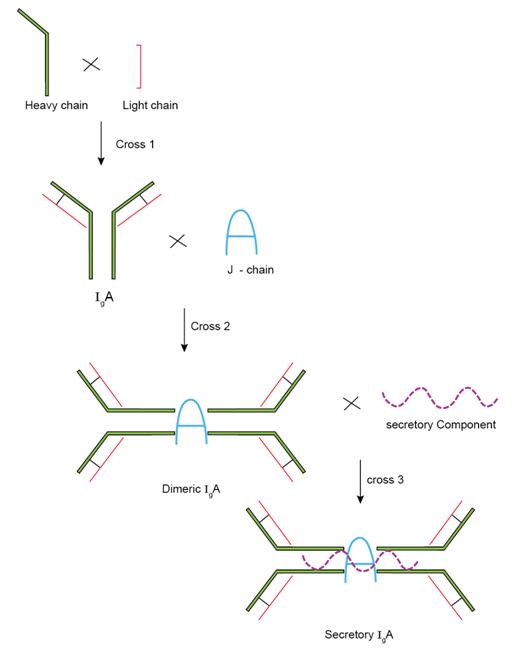
Figure 41.2: Production of secondary IgA molecule