Life Cycle:
There are two different types of life cycle present in phages: (i) Lytic cycle and (ii) Lysogenic cycle. Lytic (virulent) cycle kill the host cell that they infect, while lysogenic (temperate) cycle establishes a persistent infection without killing the host cell.
(A.) Lytic Cycle:
These are also known as virulent cycle because phages multiply inside the host and lyse the cell at the end of its life cycle.After attachment of tail fibre to host, genetic materials are injected inside the host. The time period between the entry of genetic material inside the host and release of mature phage after end of life cycle is termed as eclipse period. Synthesis of phage components and its packaging into mature phages takes place in this period. After infection, the genetic material of phages uses host biosynthetic machinery for replication, transcription and translation. Structural proteins of phages (capsid, tail etc.) are also synthesized inside the host using host biosynthetic machinery. After synthesis, genetic materials are packed inside the capsid and tail is attached on it. This process is called as maturation of phages. In lytic phage, phages also synthesized lysis protein. Bacterial cells are lysed due to accumulation of phage lysis protein and mature phages are released into the medium. Around 10-1000 phages are released from the bacterial cell. The average yield of phages per infected bacterial cell is known as burst size.
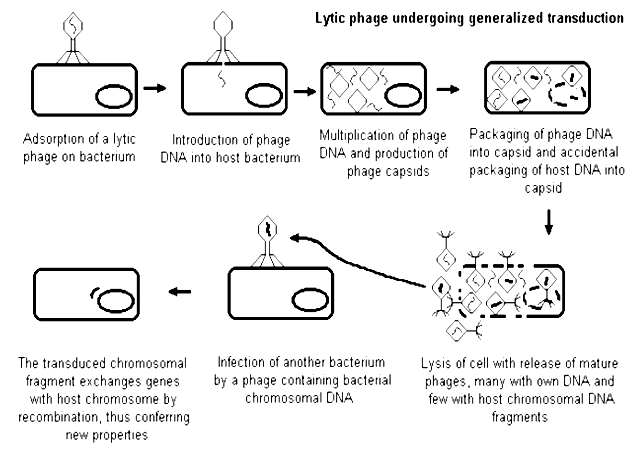
Fig. 10. Lytic cycle of bacteriophage infection