What are Bacteriophages?
Bacteriophages are obligate intracellular parasite on bacteria that uses bacterial machinery system for its own multiplication and development. These are commonly referred as “phage”. Bacteriophages were jointly discovered by Frederick Twort (1915) in England and by Felix d'Herelle (1917) at the Pasteur Institute in France. “Bacteriophage” term was coined by Felix d'Herelle. Some of the examples of bacteriophages are, Spherical phages such as φX174 (ssDNA), Filamentous phages such as M13(ssDNA), T-even phages such as T2, T4 and T6 that infect E.coli, Temperate phages such as λ and μ.
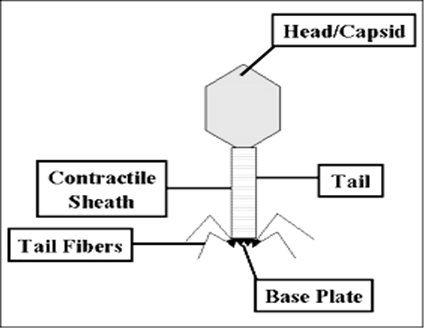
Fig. 8. Basic structure of Bacteriophages
Composition:
All bacteriophages contain nucleic acid as genetic material and protein. Depending upon the phage, the genetic material may be either DNA or RNA. Certain unusual modified bases are present in the genetic material of phages which protect the phage genetic material from nucleases during infection. Protein surrounds the genetic materials and protects to the surrounding environment.