Domains
Advances in genomic DNA sequencing of the microorganisms, biologists are increasingly adapting the classification of living organisms that recognizes three domains, a taxonomic level higher than kingdom. Archaebacteria are in one domain, eubacteria in a second, and eukaryotes in the third. Domain Eukarya is subdivided into four kingdoms plants, animals, fungi, protists.
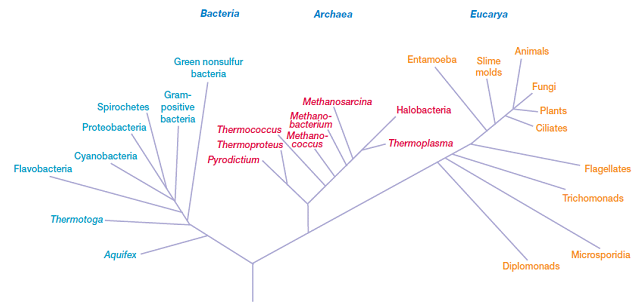
Fig. 1 Three domains based on Woese rRNA sequence analysis
Domain- Archaebacteria
The term archaebacteria (Greek, archaio, ancient) refers to the ancient origin of this group of bacteria, which seem to have diverged very early from the eubacteria. They are inhabited mostly in extreme environments. The archaebacteria are grouped (based primarily on the environments in which they live) into three general categories methanogens, extremophiles and non extreme Archaebacteria.

Fig. 2 - Universal Phylogenetic Tree
Domain- Bacteria
The Eubacteria are the most abundant organisms on earth. It plays critical roles like cycling carbon and sulfur. Much of the world's photosynthesis is carried out by eubacteria. However, certain groups of eubacteria are also responsible for many forms of disease.
Domain- Eukarya
It consists of four kingdoms. The first of which is protista, mostly unicellular organism like amoeba. The other three kingdoms are plants, fungi, animals. Multicellularity and sexuality are the two unique characters that differentiate from prokaryote and eukaryotes.
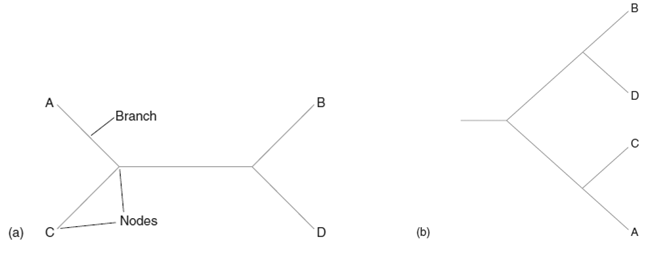
Fig. 3 . Phylogenetic tree. a) unrooted tree, b) rooted tree.