A. Protein and Amino acid Catabolism
Some bacteria and fungi particularly pathogenic, food spoilage and soil microorganisms can use proteins as their source of carbon and energy.
- 1. Proteases are enzymes that break down proteins into amino acids
2. Amino acids are deaminated, and then enter the Kreb's Cycle.
Intact proteins cannot cross bacterial plasma membrane, so bacteria must produce extracellular enzymes called proteases and peptidases that break down the proteins into amino acids, which can enter the cell. Many of the amino acids are used in building bacterial proteins, but some may also be broken down for energy. If this is the way amino acids are used, they are broken down to some form that can enter the Kreb's cycle. These reactions include:
- 1. Deamination or Transamination —the amino group is removed or transferred, or converted to an ammonium ion, and excreted. The remaining organic acid (the part of the amino acid molecule that is left after the amino group is removed) can enter the Kreb's cycle.
2. Decarboxylation —the ---COOH group is removed.
3. Dehydrogenation —a hydrogen is removed.
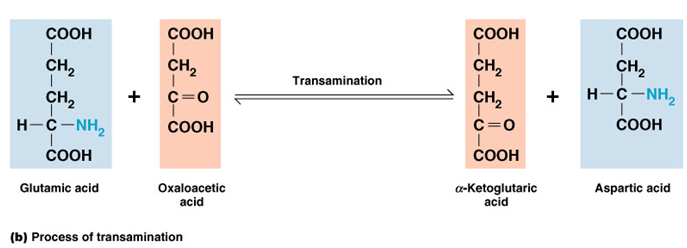
Fig. 11. Process of Transamination
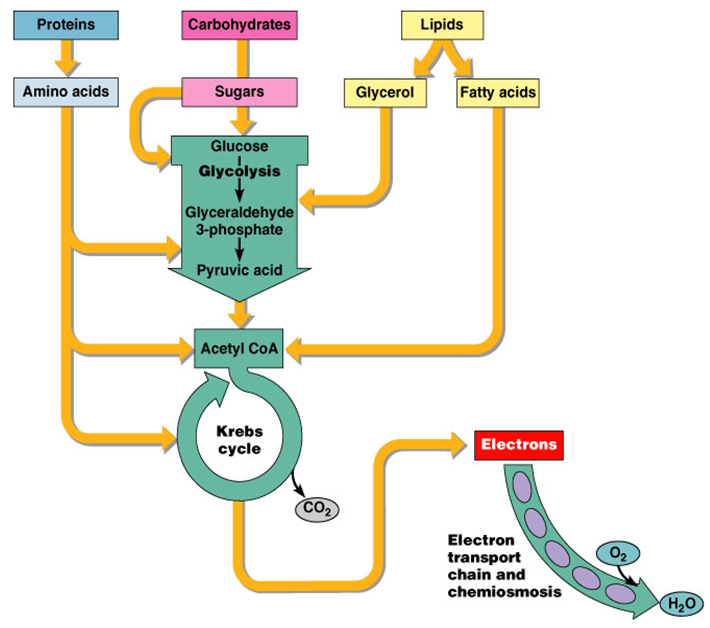
Fgi. 12. Overview of catabolism of Organic Acids