Radiation:
Electromagnetic radiation of various types bombards our world. As the wavelength of electromagnetic radiation decreases, the energy of the radiation increases – gamma rays and X rays are much more energetic than visible light or infrared waves (Fig. 7). Sunlight is the major source of radiation on the earth. It includes visible light, ultraviolet radiation, infrared rays and radio waves. Most life is dependent on the ability of photosynthetic organisms to trap the light energy of the sun as visible light. Many forms of electromagnetic radiation are very harmful to microorganisms. Ionizing radiation, radiation of very short wavelength or high energy can cause atoms to lose electrons or ionize. The two major forms of ionizing radiation, X rays which are artificially produced and gamma rays which are emitted during radioisotope decay. Low levels of ionizing radiation will produce mutations, higher levels are directly lethal. Some prokaryotes like Deinococcus radiodurans and bacterial endospores are resistant and can cause a variety of changes in cells like; it breaks hydrogen bonds, oxidises double bonds, destroys ring structures and polymerizes some molecules. Oxygen enhances these destructive e effects, probably through the generation of hydroxyl radicals (OH.). Destruction of DNA is the most important cause of death of microorganisms. Ultraviolet radiation kills all kinds of microorganisms due to its short wavelength (approximately 10 to 400 nm) and high energy. The most lethal UV radiation has a wavelength of 260 nm, the wavelength most effectively absorbed by DNA. Formation of thymine dimmers in DNA is the primary mechanism of UV damage; these dimmers inhibit DNA replication and function. This damage is repaired by photo reactivation, where blue light is used by a photo reactivating enzyme (photolyase) to split the thymine dimmers. Dark reactivation, where a short sequence containing the thymine dimmers can also be excised and replaced in the absence of light. Damage can also be repaired by the recA protein in recombination repair and SOS repair.
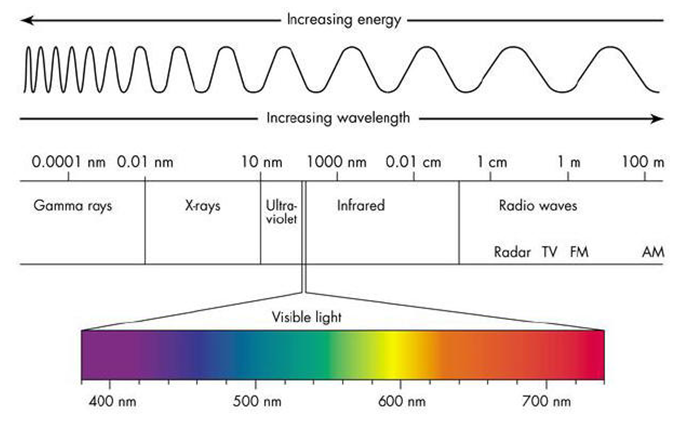
Fig. 7 . Electromagnetic spectrum
Visible light – immensely beneficial becuas eit is the source of energy for photosynthesis. Visible light when present in sufficieint intensity can damage or kill microbial cells. Pigments called photosensitizers and O2 are required. All microorganisms possess pigments like chlorophyll, bacteriochlorophull, cytochromes and flavins which absorb light energy, become exited or activated and act as photosensitizers. The excited photosensitizer (P) transfers its energy to O2 generating singlet oxygen (‘O2).
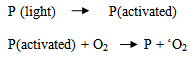
Singlet oxygen is very reactive, powerful oxidizing agent that will quickly destroy a cell. Many microorganisms that are airborne or live on exposed surface use carotenoid pigments for protection against photooxidation. Carotenoids effectively quench singlet oxygen that is absorbing energy from singlet oxygen and convert it back into the unexcited ground state.