Oxygen Concentration: An aerobe is an organism able to grow in the presence of atmospheric O2 and the ones that grow in its absence is an anaerobe. Organisms which completely are dependent on atmospheric O2 for growth are obligate aerobes, and it serves as the terminal electron acceptor for the electron transport chain in aerobic respiration and employs it in the synthesis of sterols and unsaturated fatty acids. Organisms which do not require O2 for growth but do grow better in its presence are called facultative anaerobes . Aerotelerant anaerobes such as Enterococcus faecalis simply ignore O2 and grow equally well whether it is present or not. Obligate anaerobes like Bacteroides, Fusobacterium, Clostridium pasteurianum, Methanococcus, Neocallimastix, do not tolerate O2 at all and die in its presence. Aerotelerant and obligate anaerobes cannot generate energy through respiration and must employ fermentation or anaerobic respiration pathways for the purpose. Microaerophiles are those organisms that are damaged by the normal atmospheric levels of O2 (20%) and require O2 levels between the range of 2% to 16% for growth. The nature of bacterial O2 responses can be readily determined by growing the bacteria in culture tubes filled with a solid culture medium or a special medium like thioglycollate broth, which contains a reducing agent to lower O2 levels (Fig. 6). Aerobic microorganisms are cultured, either the culture vessel is shaken to aerate the medium or sterile air is pumped. Anaerobic microorganisms require special anaerobic media containing reducing agents such as thioglycollate or cysteine may be used. Removing air with a vacuum pump and flushing out residual oxygen with nitrogen gas is also preferred. Co2 and nitrogen is added to the chamber since many anaerobes require a small amount of Co2 for best growth. The technique in which gas pak jar is used can be used.
Prokaryotes and protozoa are found arranged among all the 5 types of microorganisms. Fungi are normally aerobic, but species particularly among yeasts, are facultative anaerobes. Algae are almost always obligate aerobes. The different relationships with O2 appear due to several factors, including the inactivation of proteins and the effect of toxic O2 derivatives. Enzymes can be inactivated when sensitive groups like sulfydryls are oxidised. A notable example is the nitrogen fixation enzymes nitrogenise which is very O2 sensitive.
Oxygen accepts electrons and is readily reduced because its two outer orbital electrons are unpaired. The reduction products such as superoxide radical, hydrogen peroxide and hydroxyl radical can be resulted by flavoproteins, several other cell constituents and radiation.
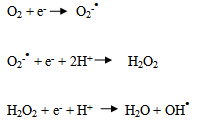
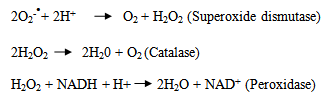
These are extremely toxic because they are powerful oxidizing agents and rapidly destroy cellular constituents. As microorganisms can be killed, they need to protect themselves from such oxygen products. Microorganisms possess enzymes that afford protection against toxic O2 products. Obligate aerobes and facultative anaerobes usually contain the enzymes superoxide dismutase (SOD) and catalase, which catalyze the destruction of superoxide radical and hydrogen peroxide respectively. Peroxidase also can be used to destroy hydrogen peroxide.