Group Translocation: In active transport, solute molecules move across a membrane without modification. Many prokaryotes also take up molecules by group translocation, a process in which a molecule is transported into the cell while being chemically altered. For example, Phosphoenolpyruvate: Sugar phosphotransferease system (PTS). It transports a variety of sugars while phosphorylating them using phosphoenolpyruvate (PEP) as the phosphate donor.
PEP + Sugar (outside) → Pyruvate + Sugar-P (inside)
In E. coli and Salmonella typhimurium, it consists of two enzymes and a low molecular weight heat stable protein (HPr). HPr and enzyme I (EI) are cytoplasmic. Enzyme II (EII) is more variable in structure and often composed of three subunits or domains. EIIA is cytoplasmic and soluble. EIIB also is hydrophilic but frequently attached to EIIC, a hydrophobic protein that is embedded in the membrane. A high energy phosphate is transferred from PEP to enzyme II (EII) with the aid of enzyme I (EI) and HPr. Then a sugar molecule is phosphorylated as it is carried across the membrane by enzyme II (EII). Enzyme II (EII) transports only specific sugars and varies with PTS, whereas enzyme I (EI) and HPr are common to all PTS's (Fig. 5).
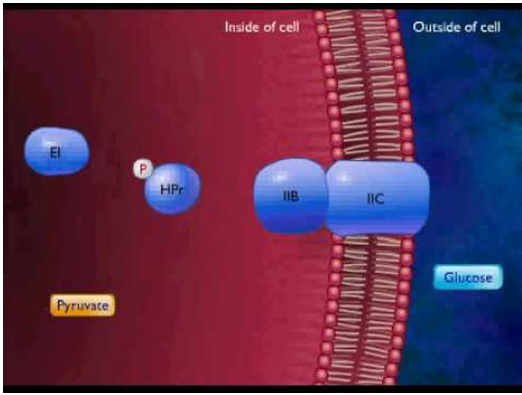
Fig. 5. Group translocation: Bacterial PTS transport.
PTS's are widely distributed in prokaryotes. Aerobic bacteria lack PTS's. Genera Escherichia, Salmonella, Staphylococcus and other facultative anaerobic bacteria have phosphotransferase systems; some obligate anaerobic bacteria (Clostridium) also have PTS's. Many carbohydrates are transported by these systems. E. coli takes up glucose, fructose, mannitol, sucrose, N-acetylglucosamine, cellobiose and other carbohydrates by group translocation.
Iron Uptake:
All microorganisms require iron for use in cytochromes and many enzymes. Iron uptake is made difficult by the extreme insolubility of ferric ion (Fe3+) and its derivatives, which leave little free, iron available for transport. Many bacteria and fungi have overcome this difficulty by secreting siderophores. Siderophores – are low molecular weight molecules that are able to complex with ferric ion and supply it to the cell. These are either hydroxamates or phenolates-catecholates. Ferrichrome is a hydroxamate produced by many fungi; enterobactin is the catecholate formed by E.coli. Microorganisms secrete sidereophores when little iron is available in the medium. Once the iron-siderophore complex has reached the cell surface, it binds to a siderophore receptor protein. The iron is either released to enter the cell directly or the whole iron-siderophore complex is transported inside by an ABC transporter. In E.coli, the siderophore receptor is in the outer membrane of the cell envelope; when the iron reaches the periplasmic space, it moves through the plasma membrane with the aid of the transporter. After the iron has entered the cell, it is reduced to the ferrous form (Fe2+). Iron is so crucial to microorganisms that many use more than one route of iron uptake to ensure an adequate supply.
REFERENCES:
Text Books:
1. Jeffery C. Pommerville. Alcamo's Fundamentals of Microbiology (Tenth Edition). Jones and Bartlett Student edition.
2. Gerard J. Tortora, Berdell R. Funke, Christine L. Case. Pearson - Microbiology: An Introduction. Benjamin Cummings.
Reference Books:
1. Lansing M. Prescott, John P. Harley and Donald A. Klein. Microbiology. Mc Graw Hill companies.