Active transport:
Active transport is the transport of solute molecules to higher concentrations or against a concentration gradient, with the use of metabolic energy input. It resembles facilitated diffusion in the involvement of protein carrier activity, but differs in its use of metabolic energy and in its ability to concentrate substances. One example of active transport is binding protein transport systems or ATP-binding cassette transporters (ABC transporters) are active in bacteria, archaea and eukaryotes.
ABC transporters: These transporters consist of two hydrophobic membrane spanning domains associated on their cytoplasmic surfaces with two nucleotide-binding domains. The membrane spanning domains from a pore in the membrane and the nucleotide binding domains bind and hydrolyze ATP to drive uptake. ABC transporters employ special substrate binding proteins, which are located in the periplasmic space of gram-negative bacteria or are attached to membrane lipids on the external face of the gram positive plasma membrane. These binding proteins, bind the molecule to be transported and then interact with the membrane transport proteins to move the solute molecule inside the cell (Fig 2). E. coli transports a variety of sugars (arabinose, maltose, galactose, and ribose) and amino acids (glutamate, histidine, leucine) by this mechanism.
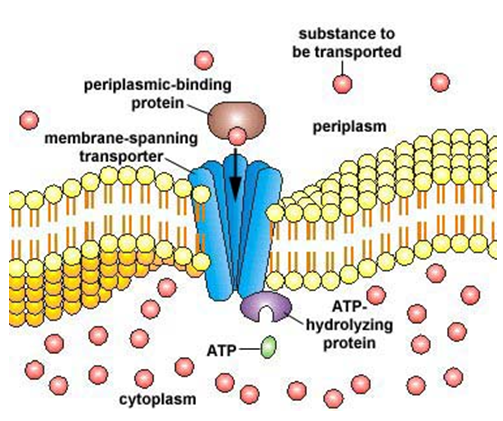
Fig. 2. ABC transporter system.
Eukaryotic ABC transporters are sometimes of great medical importance. Some tumor cells pump drugs out using these transporters. Cystic fibrosis results from a mutation that inactivates an ABC transporter that acts as a chloride ion channel in lungs.
Bacteria also use Proton gradients generated during electron transport to drive active transport. The lactose permease of E.coli transports a lactose molecule inward as a proton simultaneously enters the cell. Such linked transport of two substances in the same direction is called Symport (Fig. 3). E.coli also uses proton symport to take up amino acids and organic acids like succinate and malate.
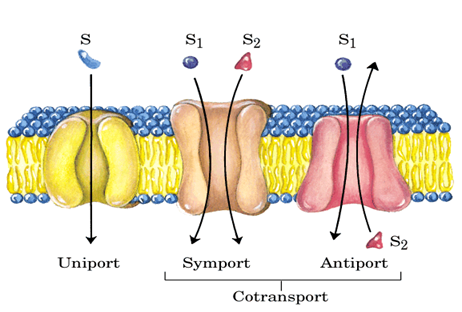
Fig. 3. Comparison of the three different types of transport mechanisms.
A proton gradient also can power active transport indirectly, often through the formation of a sodium ion gradient. In E. coli , sodium transport system pumps sodium outward in response to the inward movement of protons. Such linked transport in which the transported substances move in opposite directions is called Anitport. The sodium gradient generated by this proton anitport system then drives the uptake of sugars and amino acids. E.coli has at least transport systems for the sugar galactose.
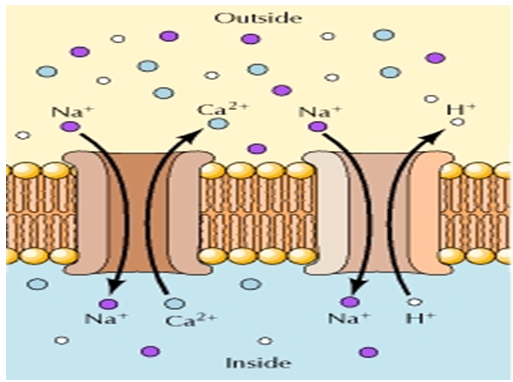
Fig. 4. Antiport mechanism - linked transport of two substances in opposite direction.