5-4.4. Disarmed Ti-plasmid derivatives as plant vectors
5-4.4.1. Prototype disarmed Ti vector
Ti plasmid is a natural vector for genetically engineering plant cells due to its ability to transfer T-DNA from the bacterium to the plant genome. But wild-type Ti plasmids are not suitable as vectors due to the presence of oncogenes in T-DNA that cause tumor growth in the recipient plant cells. For efficient plant regeneration, vectors with disarmed T-DNA are used by making it non-oncogenic by deleting all of its oncogenes. The foreign DNA is inserted between the RB and LB and then integrated into the plant genome without causing tumors.
For example, Zambryski et al. (1983) substituted pBR322 sequences for almost all of the T-DNA of pTiC58, leaving only the left and right border regions and the nos gene. The resulting construct was called pGV3850.
No tumour cell formation takes place when modified T-DNA is transferred from Agrobacterium carrying pGV3850 plasmid. The evidence of transfer is done by screening the cells for nopaline production.
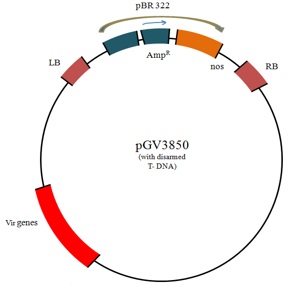
Figure 5-4.4.1: Structure of the Ti-plasmid pGV3850 with disarmed T-DNA.
The creation of disarmed T-DNA is an important step forward, but the absence of tumor formation makes it necessary to use an alternative method for the identification of transformed plant cells. Opine production using pGV3850 was exploited as a screenable phenotype, and the ocs and nos genes are now widely used as screenable markers.