5-3.1.2. Microinjection
- DNA microinjection was first proposed by Dr. Marshall A. Barber in the early of nineteenth century.
- This method is widely used for gene transfection in mammals.
- It involves delivery of foreign DNA into a living cell (e.g. a cell, egg, oocyte, embryos of animals) through a fine glass micropipette. The introduced DNA may lead to the over or under expression of certain genes.
- It is used to identify the characteristic function of dominant genes.
5-3.1.2(a). Procedure
- The delivery of foreign DNA is done under a powerful microscope using a glass micropipette tip of 0.5 mm diameter.
- Cells to be microinjected are placed in a container. A holding pipette is placed in the field of view of the microscope thatsucks and holds a target cell at the tip. The tip of micropipette is injected through the membrane of the cell to deliver the contents of the needle into the cytoplasm and then the empty needle is taken out.
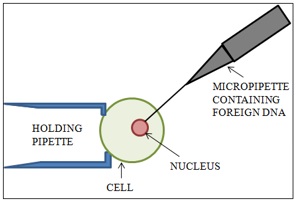
Figure 5-3.1.2(a): Delivery of DNA into a cell through microinjection.
(Adapted from
http://www.eplantscience.com/index_files/biotechnology/Genes%20&%20Genetic%20Engineering/Techniques%20of%20Genetic%20Engineering/biotech_microinjection.php)