5-1.4.4. Retroviral vectors
Retroviruses are RNA viruses that replicate via a ds-DNA intermediate. The infection cycle begins with the interaction between viral envelope and the host cell's plasma membrane, delivering the particle into the cell. The capsid contains two copies of the RNA genome, as well as reverse transcriptase/integrase. After infection, the RNA genome is reverse transcribed to produce a cDNA copy, a DNA intermediate, which integrates into the genome randomly.
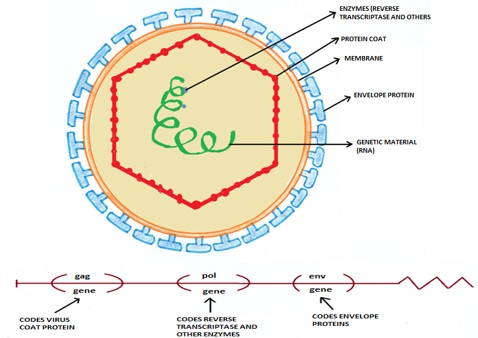
Figure 5-1.4.4(a): Structure of a Retrovirus vector. RNA showed in the figure is single stranded.
Life cycle of retroviruses
A retrovirus, on binding to a cell surface receptor, enters the cell where it reverse transcribes the RNA into double-stranded DNA. Viral DNA gets integrated into the cell chromosome to form a provirus. Cellular machinery transcribes, processes the RNA and undergoes translation into viral proteins. The viral RNA and proteins are then assembled to form new viruses which are released from the cell by budding (Figure 5-1.4.4(b).).