4. In kidney, membrane bound guanylyl cyclase is activated by the hormone atrial natriuretic factor (ANF), which is released by cells in atrium of the heart when the heart is stretched by increased blood volume. ANF comes to kidney with blood from heart and activates membrane bound guanylyl cyclase in the cells of collecting ducts. The resulting rise in cGMP level in cells triggers increase renal excretion of Na+ and water, driven by change in osmotic pressure. Water loss causes reduction of blood volume which counters the production of ANF. Vascular smooth muscle also contains ANF receptor-guanylyl cyclase which release. On binding to these receptor , ANF causes relaxation of blood vessels which increases the blood flow with decreasing blood pressure.
cGMP, like cAMP get synthesized by receiving odourous input by olfactory receptor. cGMP is produced slowly and has a more sustained life than cAMP. cGMP in the olfactory is synthesized by both membrane guanylylcylcase (mGC) as well as soluble guanylyl cyclase (sGC). cGMP synthesis in the olfactory is due to sGC activation by nitric oxide, a neurotransmitter. cGMP also requires increased intracellular levels of cAMP and the cross-link between the two second messengers seems to be due to rising intracellular calcium levels.
Vasodilation: NO is an extracellular gaseous second messenger. NO is unusual because it acts both as an extracellular messenger, mediating intercellular communication, and as a second messenger, acting within the cell in which it is generated. NO is synthesized by L-arginine which is catalyzed by nitric oxide synthesae. The NO formed in the endothelial cell diffuses across the plasma membrane and into the adjacent smooth muscle cells, where it binds and stimulates guanylyl cyclase which synthesizes cyclic GMP (cGMP).
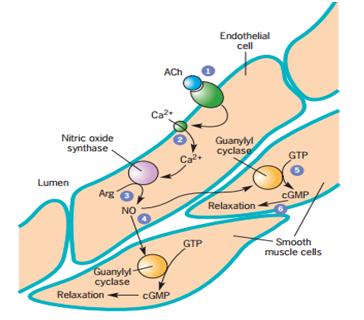
Figure 4: Signal transduction pathway leads to dilation of blood vessel through NO and cGMP.
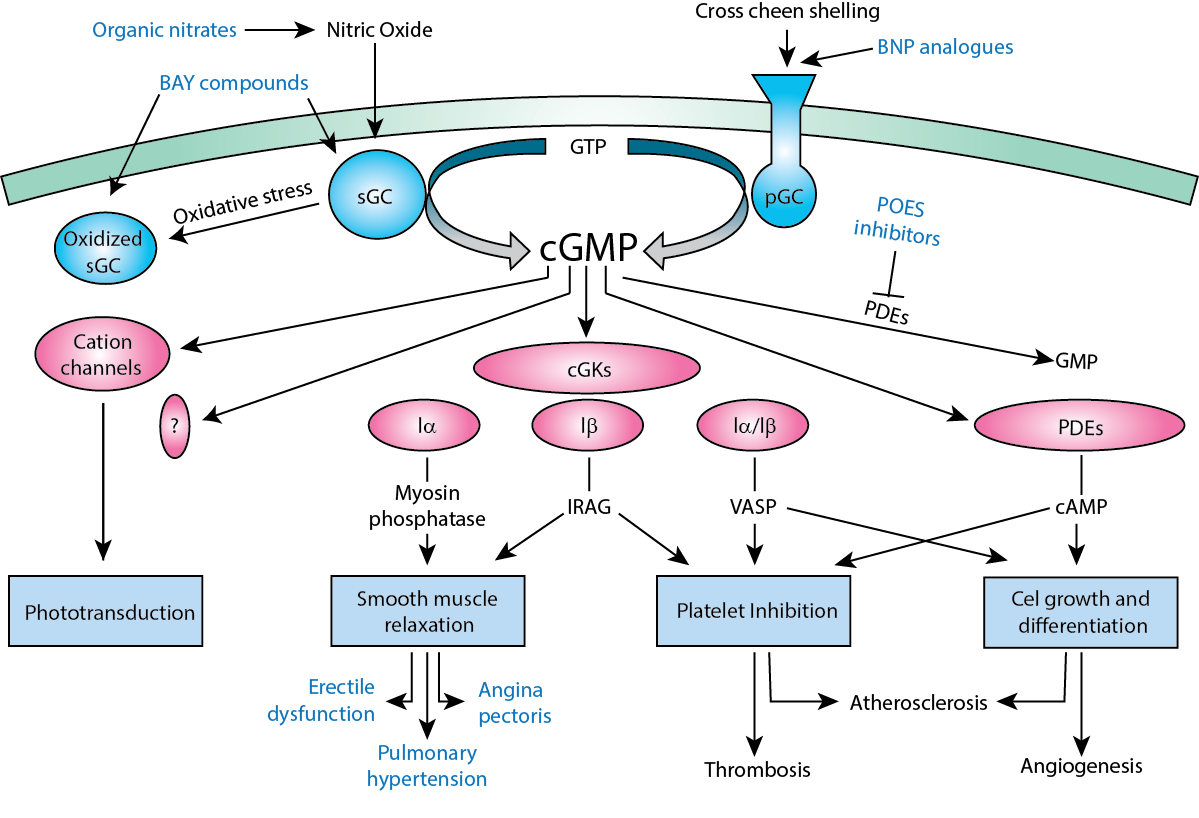
Figure 5: Pathways of generation of cGMP and several areas of effect