Lampbrush chromosome
Lampbrush chromosomes were first observed by Flemming in 1882 in sections of Salamander oocytes and later described by Ruckert in the year 1892. They appeared like brushes used for cleaning lamps, hence the name lampbrush chromosome. They are transitory structures and can be observed during the diplotene stage of prophase I in meiosis in the oocytes of all animal species both vertebrates and invertebrates. They have been described in Sepia (Mollusca), Echinaster (Echinodermata) and in several species of insects, shark, amphibians, reptiles, birds and mammals (humans). Lampbrush chromosomes have also been found in spermatocytes of several species, giant nucleus of Acetabularia and even in plants. Generally they are smaller in invertebrates than vertebrates. They are observed in oocytes because oocytes are high in DNA content. Lampbrush chromosomes are functional for studying chromosome organization and genome function during meiotic prophase. Additionally lampbrush chromosomes are widely used for construction of detail cytological maps of individual chromosomes.
They are of exceptionally large sizes and present in bivalent form. They are formed due to the active synthesis of mRNA molecules for future use by the egg cells, when no synthesis of mRNA molecule is possible during the mitotic cell division. Lampbrush chromosomes are clearly visible in the light microscope they are organized into a series of chromomeres with large chromatin symmetrical loops extending laterally (Figure 2). Each loop appears at a constant position in the chromosome (10,000 loops per chromosome set or haploid set). Each loop has an axis made up of DNA unfolded from the chromosome and is transcriptionally highly active. Wherein several transcription units with polarized RNP-matrix coats the DNA axis of the loop. The majority of the DNA, however, is not in loops but remains highly condensed in the chromomeres on the axis and lacks expression of genes.
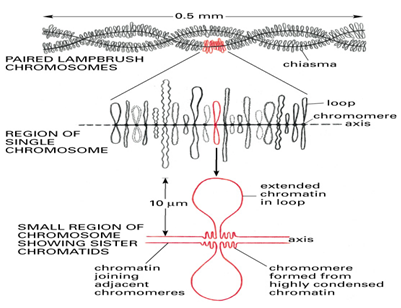
Figure 2: Lampbrush chromosome. This figure has been adapted from the molecular biology of the cell, by Bruce Alberts, 4th Ed. 2008.