Events of Interphase: The interphase is characterized by the following features: The nuclear envelope remains intact. The chromosomes occur in the form of diffused, long, coiled and indistinctly visible chromatin fibres. The DNA amount becomes double. Due to accumulation of ribosomal RNA (rRNA) and ribosomal proteins in the nucleolus, the size of the latter is greatly increased. In animal cells, a daughter pair of centrioles originates near the already existing centriole and, thus, an interphase cell has two pairs of centrioles. In animal cells, net membrane biosynthesis increases just before cell division (mitosis). This extra membrane is stored as blebs on the surface of the cells about to divide. Events in interphase takes place in three distinct phases.
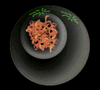
Figure 2: Interphase
G1 Phase: After the M phase of previous cell cycle, the daughter cells begin G1 of interphase of new cell cycle. G1 is a resting phase. It is also called first gap phase , as no DNA synthesis takes place during this stage. It is also known as the first growth phase , since it involves synthesis of RNA, proteins and membranes which leads to the growth of nucleus and cytoplasm of each daughter cell towards their enhancing size. During G1 phase, chromatin is fully extended and not distinguishable as discrete chromosomes with the light microscope. Thus, it involves transcription of three types of RNAs, namely rRNA, tRNA and mRNA; rRNA synthesis is indicated by the appearance of nucleolus in the interphase (G1 phase) nucleus. Proteins synthesized during G1 phase (a) regulatory proteins which control various events of mitosis (b) enzymes (DNA polymerase) necessary for DNA synthesis of the next stage and (c) tubulin and other mitotic apparatus proteins. G1 phase is most variable as to duration it either occupies 30 to 50 per cent of the total time of the cell cycle. Terminally differentiated somatic cells (end cells such as neurons and striated muscle cells) that no longer divide, are arrested usually in the G1 stage, such a type of G1 phase is called G0 phase.
S phase: During the S phase or synthetic phase of interphase, replication of DNA and synthesis of histone proteins occur. New histones are required in massive amounts immediately at the beginning of the S period of DNA synthesis to provide the new DNA with nucleosomes. At the end of S phase, each chromosome has two DNA molecules and a duplicate set of genes. S phase occupies roughly 35 to 45 per cent time of the cell cycle.
G2 phase: This is a second gap or growth phase or resting phase of interphase. During G2 phase, synthesis of RNA and proteins continues which is required for cell growth. It may occupy 10 to 20 per cent time of cell cycle. As the G2 phase draws to a close, the cell enters the M phase.
Dividing phase: There are two types of cell division possible. Mitosis and meosis. The mitosis (Gr., mitos =thread) occurs in the somatic cells and it is meant for the multiplication of cell number during embryogenesis and blastogenesis of plants and animals. Fundamentally, it remains related with the growth of an individual from zygote to adult stage. Mitosis starts at the culmination point of interphase (G2 phase). It is a short period of chromosome condensation, segregation and cytoplasmic division. Mitosis is important for growth of organism, replacement of cells lost to natural friction or attrition , wear and tear and for wound healing. Hence, mitosis is remarkably similar in all animals and plants. It is a smooth continuous process and is divided into different stages or phases.