Protein (Part-III)
FUNCTIONS OF PROTEINS: Determination of 3-D structure of protein is important for understanding its functions. In prokaryotic and eukaryotic cells, protein is the main molecule to perform many functions; such as enzymes to catalyze to various chemical reactions, adaptor molecule for different ligands, messenger molecule to relay the signal within the cell to produce factors to generate defense response against pathogens. The selected protein functions are as follows:
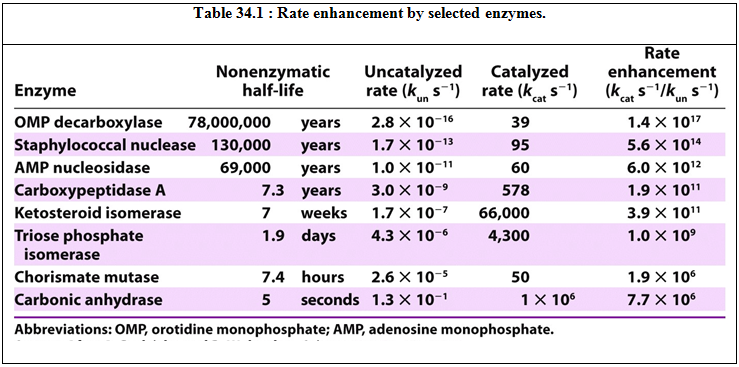
ENZYME: The proteins are best known for their role in catalyzing chemical conversion required for running metabolism, manipulating DNA, replication, transcription and translation. In addition, they are involved in controlling the age of protein. On average,almost 4000 different reactions are been catalyzed by enzymes. It can enhance the rate of reaction as high as 1017 folds compared to uncatalyzed reactions. The few examples are given in Table 34.1.
REVERSIBLE BINDING OF PROTEIN TO A LIGAND: Protein is made up of hundred of amino acids but they have defined 3-D region within the protein structure to interact with cellular molecules to perform various functions. Few examples where protein binds to the different ligands: