The structural make up of solids:
• Small disordered cells are referred to be as amorphous, resulting in a broad diffraction pattern.
• Crystallites show a sufficient extent of repeated unit cells as displayed in Figure 3.07 to display diffraction.
• Random orientation of crystallites produces the typical diffraction pattern.
• Preferred orientation of crystallites will produce a significant distortion of diffraction intensities from the ideal.
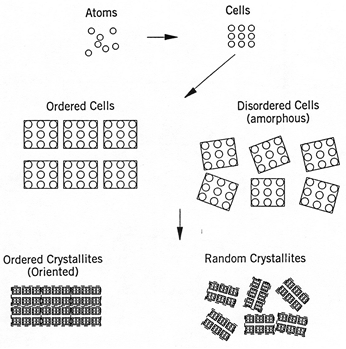
Figure 3.07: Schematic of cells to form solids [1].
Ref.: [1]. B. D. Cullity, Elements of X-ray diffraction Addison-Wesley Publishing company, Inc., USA (1956).