1 Introduction
Our primary goal is to calculate an observable physical quantity X of a thermodynamic system in thermal equilibrium with a heat bath at temperature T. A macroscopic thermodynamic system consists of a large number of atoms or molecules, of the order of Avogadro number 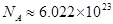 per mole. Moreover, in most general cases, the particles have complex interaction among themselves. The average property of a physical quantity of such a system is then determined not only by the large number of particles but also by the complex interaction among the particles. As per statistical mechanics, the average of an observable quantity <X> can be calculated by evaluating the canonical partition function Z of the system. However, the difficulty in evaluating the exact partition function Z is two fold. First, there are large number of particles present in the system with many degrees of freedom. The calculation of the partition function Z usually leads to evaluation of an infinite series or an integral in higher dimension, a (6N) dimensional space. Second, there exists a complex interaction among the particles which gives rise to unexpected features in the macroscopic behaviour of the system.
Monte Carlo (MC) simulation method can be employed in evaluating such thermal averages. In a MC simulation, a reasonable number of states are generated randomly (instead of infinitely large number of all possible states) with their right Boltzmann weight and an average of a physical property is taken over those states only. Judicious selection of some most important states which contribute most to the partition sum, provides extremely reliable results in many situations. Simplicity of the underlying principle of the technique enables its application to a wide range of problems: random walks, transport phenomena, optimization, traffic flow, binary mixtures, percolation, disordered systems, magnetic materials, dielectric materials, etc. We will be addressing the problems related to phase transitions and critical phenomena.
2 Monte Carlo Technique for Physical Systems
We will be presenting here Monte Carlo (MC) simulation as a numerical technique to calculate macroscopic observable quantities of a thermodynamic system at equilibrium. A thermodynamic system is composed of large number of interacting particles. The microstates of these particles are either represented by their canonically conjugate position and momentum (q, p) defined by the Hamilton's canonical equations or by the wave function obtained as a stationary state solution of the Schrödinger equation if the particle's dynamics is represented by classical or quantum mechanics respectively. We will be considering the classical problem here. For a classical system described by the Hamiltonian function H, the microstates are represented by points  in a 6N-dimensional phase space. Systems of interacting particles with discrete energy states can also be treated classically if they are localized, i.e ; distinguishable.