5. Morphology, fluctuation and correlation
The isotherms, 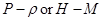 curves in the respective phase diagrams (Fig.4) develop curvature as the system approaches the critical temperature
  from above. The curvature in the isotherms is the manifestation of the long range correlation of the molecules in the fluid or spins in magnets. At high temperature, the gas molecules move randomly or the magnetic moments flip their orientation randomly. Due to the presence of interactions small droplets or domains of correlated spins appear as the temperature decreases. These droplets grow in size as T decreases closer to . At
  , droplets or domains of correlated spins of all possible sizes appear in the system. Lateral dimension of these droplets become of the order of the wavelength of ordinary light. Upon shining light on the fluid at , a strong scattering is observed and the fluid appears as milky white. The phenomenon is known as critical opalescence . Similarly in magnetic systems, domains of correlated spins of all possible sizes appear in the system and a huge neutron scattering cross section is observed at . As
  , there appears droplet or domain of correlated spins of the order of system size. One may define a length scale called correlation length which is the lateral dimension of the droplets or domains of correlated spins. Therefore, the correlation length diverges as . One should note that the system does not correspond to a ordered state at and a completely ordered state is achieved only at T=0 .
As the system approaches , there are long wave-length fluctuations in density in fluid or in the orientation of magnetic moments in the magnetic system. These fluctuations occur at every scale. If ξ is the largest scale of fluctuation and a is the lattice spacing, then the system appears to be self-similar on all length scales x for  . At , ξ is infinite and the system becomes truly scale invariant. The correlation between the spins (or molecules) is
|
|
|
|
|
|



.png)


Figure 2.7: Morphology of the system below, near and above the critical temperature  . The black region represents the liquid (up spin) and the white space represents the gas (down spin) in fluid systems (magnetic systems). A huge fluctuation in density (or in spin orientation) appears as .
measured in terms of fluctuations of spins (or density) away from their mean values:

where r is the distance between  and
and  , ξ is the correlation length and η is some exponent. At the criticality, ξ diverges to infinity and
  decays as a power law.
Close to a critical point, the large spatial correlations which develop in the system are associated with long temporal correlations as well. At the critical point, the relaxation time and characteristic time scales diverge as determined by the conservation laws. This is known as the critical slowing down . A relaxation function  may decay exponentially at long times as
  , where τ is the relaxation time. τ diverges at the critical point and the dynamic critical behavior can be expressed in terms of the power law as
  , where z is called the dynamic critical exponent.