3. Compressor:
It is a mechanical device which converts mechanical energy into fluid energy. The compressor increases the air pressure by reducing its volume which also increases the temperature of the compressed air. The compressor is selected based on the pressure it needs to operate and the delivery volume.
The compressor can be classified into two main types
- Positive displacement compressors and
- Dynamic displacement compressor
Positive displacement compressors include piston type, vane type, diaphragm type and screw type.
3.1 Piston compressors
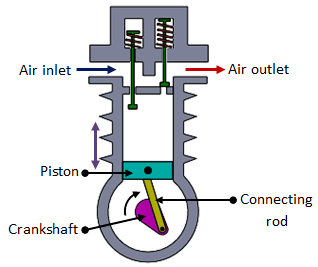
Fig. 6.1.3 Single acting piston compressor
Piston compressors are commonly used in pneumatic systems. The simplest form is single cylinder compressor (Fig. 6.1.3). It produces one pulse of air per piston stroke. As the piston moves down during the inlet stroke the inlet valve opens and air is drawn into the cylinder. As the piston moves up the inlet valve closes and the exhaust valve opens which allows the air to be expelled. The valves are spring loaded. The single cylinder compressor gives significant amount of pressure pulses at the outlet port. The pressure developed is about 3-40 bar.
3.2 Double acting compressor
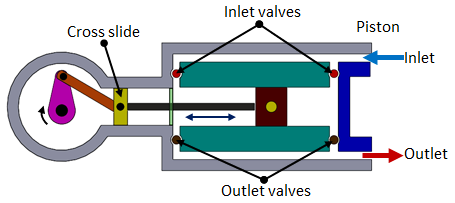
Fig. 6.1.4 Double acting piston compressor
The pulsation of air can be reduced by using double acting compressor as shown in Figure 6.1.4. It has two sets of valves and a crosshead. As the piston moves, the air is compressed on one side whilst on the other side of the piston, the air is sucked in. Due to the reciprocating action of the piston, the air is compressed and delivered twice in one piston stroke. Pressure higher than 30bar can be produced.