6.8 TMM for Damped Torsional Vibrations
In any real rotor systems damping is always present. Torsional damping may come from several sources, e.g. the shaft material, bearings, couplings, torsional vibration dampers, aerodynamic damping at discs, rubbing of the rotor with the stator, loose components mounted on shaft, etc. The shaft material or hysteretic damping comes due to intermolecular interaction in the shaft material, which results in increase in the temperature of the shaft material. The torsional vibration damper is a device which may be used to join together two-shaft section as shown in Fig. 6.46. It develops a damping torque, which depends on of the angular velocity of one shaft relative to the other. These types of damping can be considered proportional to the relative angular velocity of discs to which the shaft is connected and it is represented as cs . The disc aerodynamic (or rubbing) damping, cd, comes due to interaction of the disc with the working fluid (like the steam, the gas, the air, etc.), the lubricant, and the coolant; which results in dissipation of the energy in the form of heat. This type of damping is proportional to the angular velocity of the disc itself.
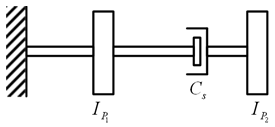
Figure 6.46 A schematic of a torsional vibration damper
Torsional dampers can be used as a means of attenuating (decreasing) system vibrations and to tune system resonant frequencies to suit particular operating conditions. The damping in the system introduces phase lag between the system displacement and torque.
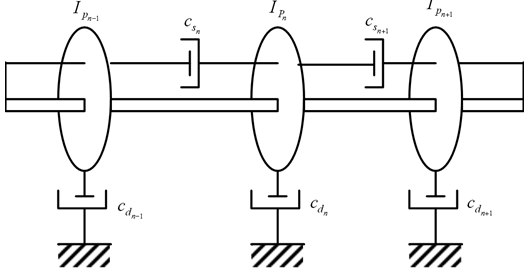
Figure 6.47 General arrangement of multi-DOF rotor system with torsional dampers
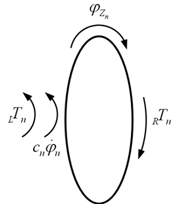
Figure 6.48 A free body diagram of rth rotor.