As categories in Cultural Studies, therefore, ethnicity, race and nation are discursive formations and important factors in the creation and maintenance of identity and subjectivity. At the same time, these formations are not fixed but flexible.
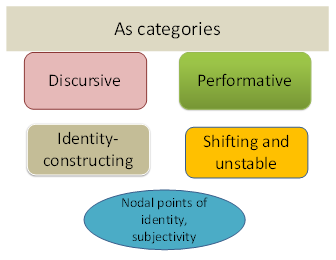
The first point brought to us by Barker refers to two things. One is that race and ethnicity as these are available to us are understood through representation. Second, he argues that these are not simply fixed representations but are shifting in nature. Thus, he talks about t he shifting character of cultural understandings of race and ethnicity in terms of representation.
The most important feature of studying politics in cultural studies is cultural politics as a politics of representation . So representation is important in how nations, ethnicities and races are represented to people and the politics of such representation. Representation is never neutral. As we saw in the lectures on representation, there are issues of power and politics regarding the representation of any cultural form of product.
Ethnic identity or even racial identities are never fixed. That is they are never established once and for all. Apart from the politics of representation, we also include within the scope of cultural studies of ethnicity, race and nation how these forms of identity keep changing.