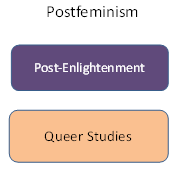
This lecture is on certain developments in the field of gender we today call post-feminism, one that is informed by a poststructuralist approach. Judith Butler is one of the foremost theorists of this shift in thinking about gender. The shift entails the following features:
• Problematisation of the sex / gender dichotomy
• The importance of representation in sexual identity
• Discourse and gender: biological truths as accessed through discourse
• The function of regulatory ways of speaking in the formation / determination of sexed bodies
The rise of queer studies critiques the history of cultural representation of marginalised groups which do not follow normative sexuality. Dani Cavallaro remarks on the non-ontological nature of such theoretical approaches:
“Anti-essentialist feminism focuses on the practices through which sexual difference is culturally constructed, and through which people's biological and anatomical characteristics arc invested with mythical meanings. In this context, the term ‘mythical' is meant to suggest that images and stereotypes or masculinity and femininity (such as the association of men with reason and science, and of women with emotions and nature) are not really based on natural distinctions. In fact they stem from contingent decisions laden with ideological connotations.”