Meme-complexes evolve in the same way as co-adapted gene-complexes. Selection favours memes that exploit their cultural environment to their own advantage. This cultural environment consists of other memes which are also being selected. Celibacy is an example. Priests of some sects or religions are expected to lead celibate lives. Here the meme of celibacy comes in conflict with the gene for reproduction. Now if a person's genes are to be propagated and the meme or the belief is celibacy, in that case the person's genes are not propagated: “For example, the habit of is celibacy is presumably not inherited genetically. A gene for celibacy is doomed to failure in the gene pool … a meme for celibacy can be successful in the meme pool.”
Dawkins argues that we should seek immortality not in our genes but in our memes. For instance the ideas given to mankind by Galileo, by Leonardo da Vinci remain with us even though Galileo and da Vinci are no longer alive. Thus according to Dawkins immortality should be sought through our cultural contributions.
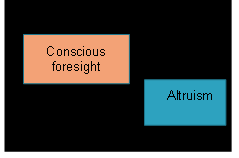
And at the end of the essay Dawkins argues that there are two things that have saved us from the ‘tyranny' of memes. These are:
a) Conscious foresight
b) Altruism
Dawkins says that these two things are not part of the memetic system: “We are built as gene machines and cultured as meme machines, but we have the power to turn against our own creators. We, alone on earth, can rebel against the tyranny of the selfish replicators.”