Hydrogen charging of fuel tanks on vehicles requires compression. Therefore, presented case considered the energy for hydrogen compression to be provided by electricity.
Table 3: GHG and air pollution emissions per MJ fuel of Hydrogen from natural gas produced
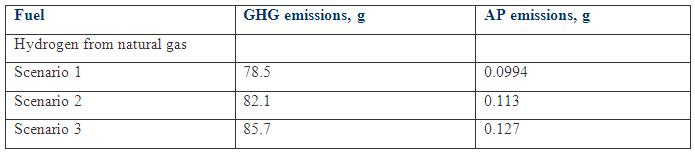 GHG and AP emissions were reported for hydrogen vehicles for the three electricity-generation scenarios considered (see table 3), accounting for the environmental effects of hydrogen compression
Table 4. Environmental impact associated with vehicle Overall Life cycle and Fuel Utilization State
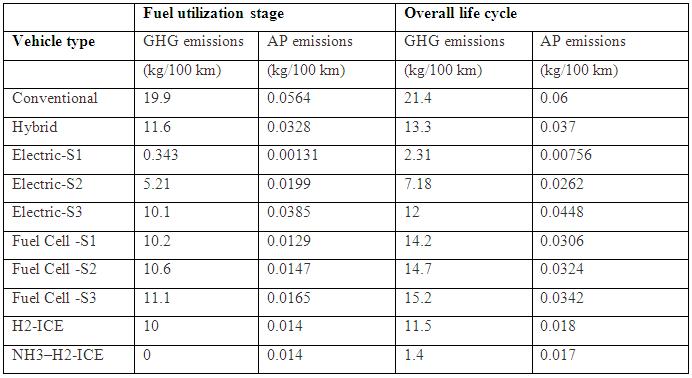 The environmental impact of the fuel utilization stage, as well as the overall life cycle is presented in Table 4. The H2-ICE vehicle results were based on the assumption that the only GHG emissions during the utilization stage were associated with the compression work, needed to fill the fuel tank of the vehicle. The GHG effect of water vapor emissions was neglected in this analysis due its little value,. For the ammonia fuel vehicle, a very small amount of pump work was needed therefore, ammonia fuel was considered to emit no GHGs during fuel utilization.
-
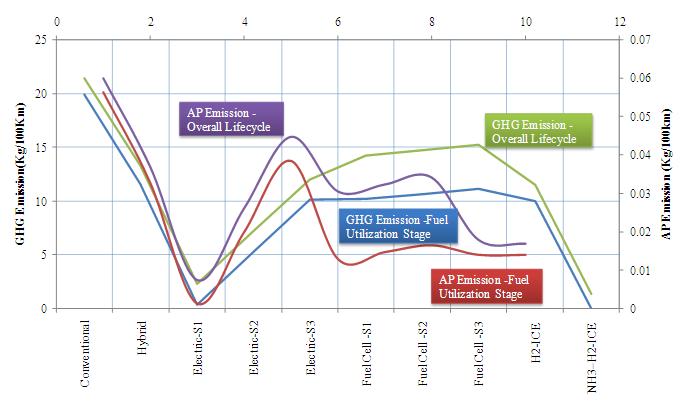
Figure1: Environmental indicators for six vehicle types