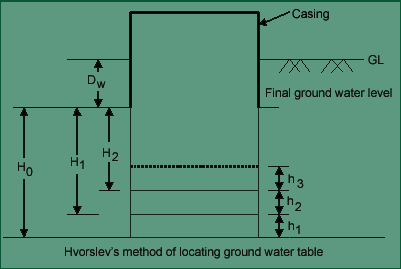
This method is also known as Hvorslev method (1949). As per this method, the water table can be located in a borehole used for soil investigation. The borehole should have the same casing to stabilize the sites. The method normally used is the Rising water level method for determining the water table locations.
This method most commonly referred to as the time lag method consists of bailing the water out of the casing and observing the rate of rise of water table in the casing at intervals of time until the rise of water table becomes negligible. The rate is observed by measuring the elapsed time and the depth of water surface below the top of the casing. The intervals at which the readings are required will vary somewhat with the permeability of the soil. In no case the elapsed time for the readings should be greater less than 5 minuites. In freely draining material such as sands, gravels, etc. the interval of time between the successive readings may not exceed more than 1 to 2 hours, but in soils of low permeability such as fine sands, silts and clays, the intervals may rise from 12 to 24 hours, and it may take a few days to determine the stabilized water table level.
Let the time be  , when the water table was at the depth of , when the water table was at the depth of  , below the normal water table level . Let the successive rise in water table levels be , below the normal water table level . Let the successive rise in water table levels be  , ,  , ,  , etc. at times , etc. at times  , ,  , ,  respectively wherein the difference in time is kept constant. respectively wherein the difference in time is kept constant. |