1.6 Biological Properties and Mechanisms of Action of Naturally Occurring Enediynes
The ene-diyne antibiotics are known to arrest formation of malignant tumors by "tying" the two strands of DNA together. By tying the two DNA strands together, ene-diynes prevent them from unraveling and thus arresting the replication process. One of the ene-diynes, Dynemicin A (Figure 7), has been particularly effective. As shown in Scheme 3, the ene-diyne portion of this molecule closes to form a cyclic structure. This cyclic structure has two radical centers. These radical centers interact with DNA, forming labile centers, which then form a covalent bond across the two strands, rendering it unable to unravel or replicate. Mutated or cancerous cells replicate faster than normal cells, so ene-diynes will have more of an effect on the mutated DNA, helping to prevent the spread of tumorous tissue. The major problem, however, is that Dynemicin A, and other ene-diynes, also react with healthy DNA, stopping all replication processes. As a result, these potential antibiotics are presently too toxic for widespread use in cancer therapy.
The enediyne antitumor antibiotics contain either DNA intercalating groups (such as DYN) or DNA minor groove binding function (such as CAL and NCS). The biological actions of these molecules are a result of three important functional domains. Each molecule contains an assemblage that consists of (a) an enediyne moiety; (b) a delivery system that communicates the enediyne moiety to its DNA target; and (b) a triggering device that, when activated, initiates the cascade of reactions that leads to generation of the reactive chemical species.
Thus the Common modes of action of enediyne class of natural anitibiotics:
- • intercalation into minor groove
- • reaction (activation) with either a thiol of NADPH - generates radical
- • radical cleavage of DNA
The enediyne antibiotics share a common mechanism for producing radical cleavage of DNA: First, the enediynes undergo cycloaromatization reactions resulting in formation of highly reactive diradical intermediates. Second, these highly reactive radicals are capable of abstracting hydrogen atoms from the DNA backbond to trigger DNA damage. The key transformation of 3-ene-1,5-diynes is a thermal rearrangement that was disclosed in the early 1970 by Masamune and Bergman that is commonly known as Bergman cyclization. The classical Bergman reaction is believed to precede through a reactive diradical benzenoid species (a p-benzyne) which cleaves the DNA by abstracting H-atom from sugar-phosphate backbone of DNA (Scheme 3).
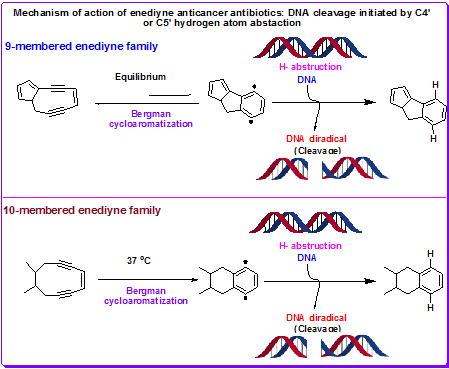
Scheme 3. Mechanism of action of enediyne anticancer antibiotics: DNA cleavage initiated by C4' or C5' hydrogen atom abstraction.
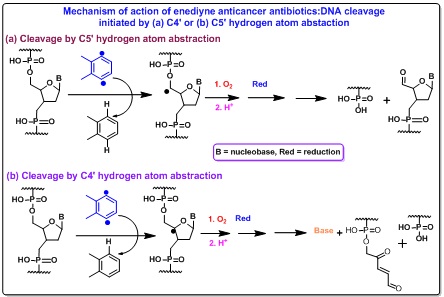
Scheme 4. Mechanism of action of enediyne anticancer antibiotics: DNA cleavage initiated by (a) C4' or (b) C5' hydrogen atom abstraction.
Less than 20% of the strand breaks result from hydrogen atom abstraction at C(4' ) (Scheme 4) and C(1' ). NCS chromophore effects primarily single-stranded DNA cuts by the C(6) radical at C(5' ) (Scheme 4) of deoxyribose, whereas those double stranded lesions which are observed involve additional hydrogen abstraction by the C(2) radical from C(1' ) (Scheme 5) or C(4' ) of the deoxyribose on the complementary strand.
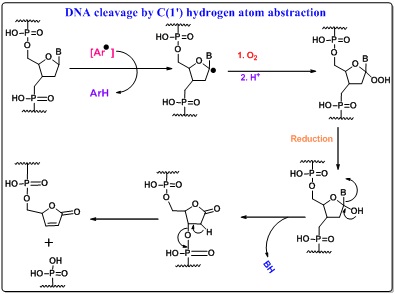
Scheme 5. Mechanism of action of enediyne anticancer antibiotics: DNA cleavage initiated by C1' hydrogen atom abstraction.